
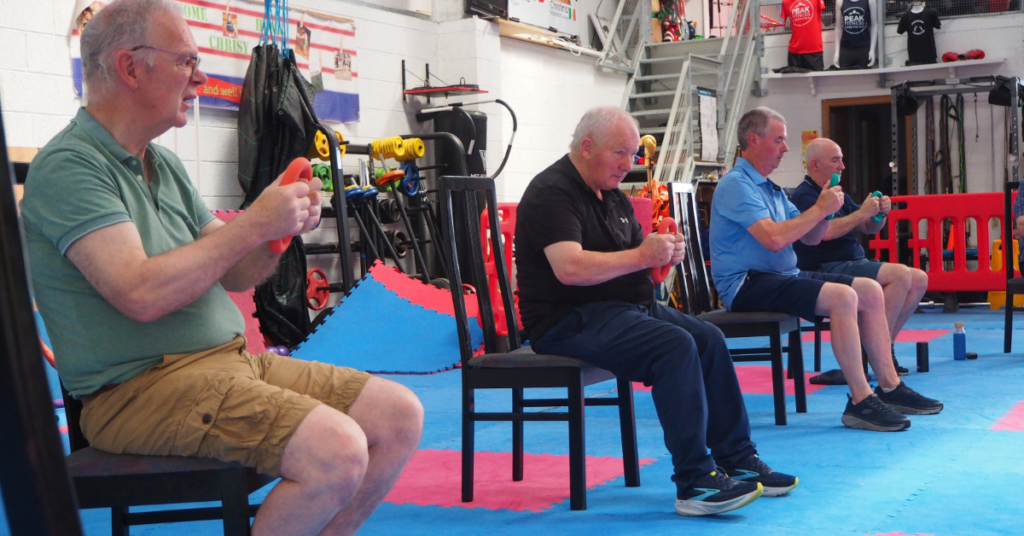
Staying active looks different for everyone. Some people feel more comfortable moving while seated, while others might prefer to stand with a little support. Adapted physical activity (APA) gives people different ways to take part.
What Does Adapted Physical Activity Mean?
Adapted physical activity, or APA, means changing an activity to suit the person taking part. Our Physical Trainers get to know what each person can do, what they find difficult and what they enjoy.
Sometimes a small change makes all the difference. A trainer might slow things down, show a different way to do a movement or offer a lighter resistance band. This means people with different abilities can move together at a pace that works for them.
Who Can Benefit?
Adapted physical activity can be particularly helpful for older adults and people living with chronic disease. Activities are adapted to suit each person’s abilities and needs, so they can stay active at a pace that works for them.
How Can It Help in Everyday Life?
The strength, balance and mobility we work on in a session are the same things we use to get up from a chair, carry the shopping or walk to meet a friend. Moving regularly can help us keep doing these things and feel more confident doing them.
There’s a social side to it too. A group session can be a chance to catch up, share a laugh and enjoy moving with other people.
What Our Programmes Offer
Our group sessions take place in local communities, nursing homes and day centres. For people who prefer individual support, we offer one-to-one sessions. You can also join a live online group class through Siel Bleu at Home.
Our Chronic Disease Management programme uses adapted physical activity to help people living with long-term health conditions build strength and feel more confident moving in everyday life.