Tag: healthy living

  • How to Combat Sleep Disorders

    How to Combat Sleep Disorders

    Sleep is a vital aspect of leading a healthy life. Unfortunately, older adults do not always have the easiest time with having a full, peaceful night’s rest. The lack of sleep older adults experience may be due to a particular health issue, a medication they are taking, or possibly because they are anxious about ageing. Sleep disorders such as sleep apnea, insomnia, and snoring are very common among older adults and drastically interrupt the suggested seven to eight hours of sleep a night. 


    How can older adults take back their restful night’s sleep? 

    Here are some tips that may help: 

    1.Set a schedule. 

    Set an hour that you wake up every morning, eats meals, and go to bed.

    2. Exercise. 

    Commit to exercising 150 minutes a week. Check with your doctor to see what the intensity of your workout should be. Note that exercising in the earlier half of the day will be more beneficial because exercising at night may keep you up later.  

    3. Keep cool. 

    For the best sleep possible, keep your bedroom temperature on the cooler side. 

    4. Have a before bedtime routine. 

    Set a routine that relaxes you, such as reading or meditating. 

    5. Don’t try too hard to fall asleep. 

    If you are unable to fall asleep within 15 minutes, get out of bed and walk to another room to read or mediate for a little bit and try falling asleep again after that. However, do not turn on the tv or go on your computer. 

    6. Talk to your doctor. 

    Tell your doctor about your lack of sleep and perhaps he or she will inform it is a side effect of your medicine or a medical issue. 


    ***Disclaimer: The information in this post is for reference only and is not intended to be a substitute for medical expertise or advice. If you have any concerns about your own or another’s health then please contact your doctor. 


    Sources:

    http://sleepeducation.org/news/2013/08/07/sleep-and-growing-older

    https://www.webmd.com/sleep-disorders/features/do-seniors-need-less-sleep#2

    Sleep Changes in Older Adults

  • Hospital to Community: How Siel Bleu Bridges the Gap

    Hospital to Community: How Siel Bleu Bridges the Gap


    Written by Shane Lee

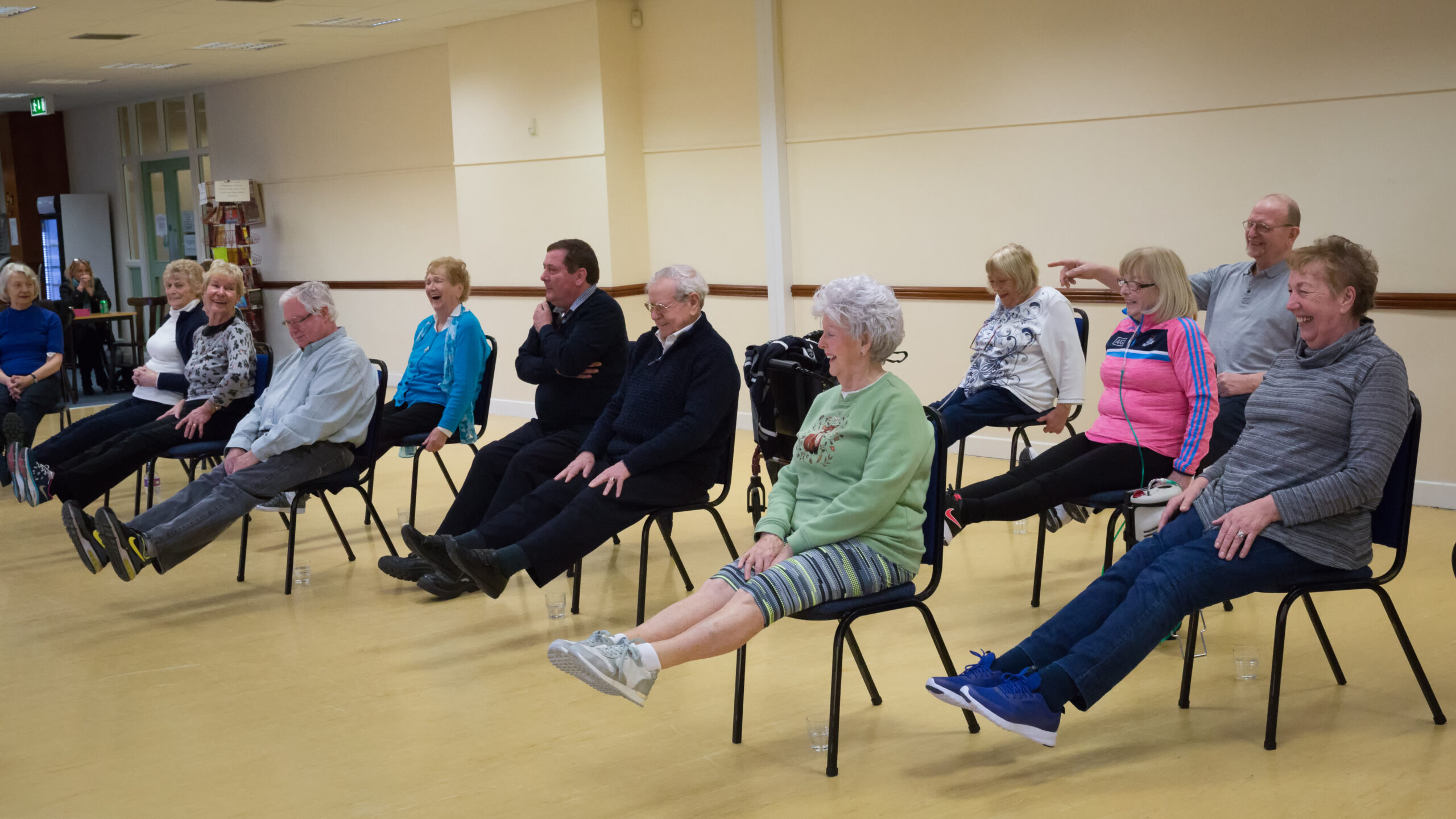
    Siel Bleu’s community based exercise classes can play a major role in bridging the gap from clinical rehabilitation and physiotherapy. Specific exercise classes for patient groups like Arthritis, Parkinson’s, Stroke, COPD and more general strength and balance programmes can increasingly contribute to the overall  health system.

    Community based exercise classes will never replace clinical interventions but can as a follow on service to reduce the likelihood of needing clinical intervention again. This is perhaps best illustrated with Chronic Obtrusive Pulmonary Disease (COPD) where many patients with the condition participate in hospital based pulmonary rehabilitation for a cycle of 8 weeks. Patients with COPD respond extremely well to this hospital based intervention through the brilliant work of respiratory specialists. Upon completion of the clinical cycle many patients wish to maintain the level of fitness and aerobic capacity which they have built up. Through joining a local (Siel Bleu Exercise, COPD & Me) class, not only can participants manage their condition and maintain their progress but, they also join a wider social support network of people all experiencing the same challenges in relation to breathlessness, lack of energy and other related challenges.

    Strength and balance programme’s can also play a huge preventive role for community dwelling older adults. Many older adults first engagement with the health system in terms of the discussion on falls and being directed towards exercise based interventions is unfortunately after a fall has occurred. Increasingly community classes can help to prevent and halt a potential decline in older adult’s physical strength and balance. Through learning and practising functional strength movements and through safely practising elements of balance, coordination and multidirectional movements the risk of decline in muscle mass, bone density and falls can all potentially be reduced.

    While many participants may understand the need to exercise, it is ultimately the sense of community, social engagement and enjoyment that will draw participants back to exercise session’s week in week out. Siel Bleu classes will always focus on functional strength movements, mobility, balance and building up overall cardiovascular endurance but it is the fun that is created within the classes that is so important in a community setting. Incorporating team exercise games and cognitive challenges are two methods in which this balance between exercise and fun can be fused. Having two teams race a piece of equipment with the losing team having to walk or perform squats is a particular favourite amongst groups which not only provides great enjoyment and a fun rivalry between opposing teams but important movements and exercise are the end result of the fun races.

    Community exercise classes also must represent the participants themselves and for this reason must include a participant driven approach with appropriate trainer guidance. Particular areas of muscular weakness, daily challenges faced or areas which have been neglected since hospital or physiotherapy sessions can be facilitated and incorporated into classes through engaging with the participants. The work from rehabilitation can be followed and continued in a more relaxed community setting.

    Going forward developing stronger pathways and collaborations between different health disciplines can play a major role in the Irish health system. It’s important to be proactive not reactive in facilitating follow on exercise classes related to conditions like Stroke and Parkinson’s which allow participants to build on the foundations of physiotherapists  and not regress after progress has been made over a number of weeks perhaps in a hospital setting. Similarly more general community programmes which are accessible to all and do not require special criteria to join can help create fewer hospital interactions through falls and fractures. Fall prevention classes have become a hugely important topic in the sphere of older adults and health but the interaction before this stage of preventing decline should be considered equally important in these discussions.

    Siel Bleu have also begun collaboration with hospital and physiotherapists through exciting new programmes such as Breast Cancer, Young Stroke Survivors and Strength and Balance programmes which have been created through various different organisations and health professionals coming together with the shared goal of creating an exercise class for participants who are experiencing the same rehabilitation journey. The journey does not end after hospital and this is where a follow on community exercise class can play a major role in bridging the return from clinical to normal everyday life.

    If you are interested in our programmes, go to: https://www.sielbleu.ie/home/programmes/

  • Brain Power: The Benefits of Exercise

    The brain, also known as our coordinating centre of sensation, intellectual, and nervous activity, is what maintains our thinking, memory, and functioning capabilities. When we are younger, we have all of these intact, and never have to think twice about the operational capacities of our brains. Yet, as we grow older this looming issue becomes more prevalent, and we have to actively work harder to preserve these properties. What if there was a way to do this, where the benefits are two-fold? A main approach to keeping your brain healthy, and sharp into our older years is through the means of exercise!

    When we are exercising we are gradually increasing our heart rate, and breathing, creating more oxygen into our bloodstream. From there, more oxygen goes to the brain leading to the production of neurons, where memory and thinking are controlled. This process increases your cognitive reserve which is the brain’s ability to improvise and find alternate ways to get the job done. It has been found that the greater the cognitive reserve, the better we are able to starve off symptoms of degenerative brain changes associated with dementia, Parkinson’s disease, multiple sclerosis, or a stroke. For this reason, many rehabilitation, or treatments surrounding these involve some form of exercise.

    Another reason why being active helps your brain, is it leads to greater brain plasticity. This is the brain’s ability to change and adapt as a result of an experience. In other words, it allows the brain to modify, or rewire itself. Without this, the human brain would be unable to develop through adulthood, or recover from a brain injury. Also, working out increases serotonin (happy hormone), and norepinephrine (stress hormone), which boosts information processing, and mood. This is why we constantly here the saying, “You will never regret a workout,” because we will always feel better after exercising. Also, many of our participants who have had mood swings due to strokes, or chronic conditions, mention how the exercises have greatly improved their mood.

    Gomes-Osman, and her colleagues looked at 98 studies that involved over 11,000 participants that were on average 73 years old, which tested the benefits of exercise on the brain. 59 percent of the participants were deemed clinically healthy, whereas the others had some form of a degenerative brain disease. They found that at least 52 hours of exercise over an average of 6 months can lead to better processing speed, which refers to the amount of time the brain needs to process information, or carry out a task. Also, the healthy individuals showed improvement in their executive function, which is the brain’s ability to plan ahead, set, and achieve goals, as well as come up with strategies. As far as exercise type (aerobic, yoga, or strength), they were equally beneficial for the senior’s thinking skills.

    Overall, exercise is multifaceted, as it helps both the body, and the mind. Even though it is scary to face our own time clocks, and there are many things out of our control, exercise is the one thing we have the choice to do. The best gift we can give ourselves, and others is the gift of health, and working out is the easiest, and cost effective way to do so.

    If you are interested in our programmes go to: https://www.sielbleu.ie/home/programmes/

    Sources: 

    https://www.google.com/search?q=brain+definition&rlz=1C1CAFB_enUS660US664&oq=brain+defin&aqs=chrome.1.69i57j0l5.16884j1j7&sourceid=chrome&ie=UTF-8

    https://www.health.harvard.edu/mind-and-mood/what-is-cognitive-reserve

    https://www.health.harvard.edu/blog/regular-exercise-changes-brain-improve-memory-thinking-skills-201404097110

    https://www.medicalnewstoday.com/articles/321981.php

    https://www.psychologytoday.com/us/blog/the-fifth-vital-sign/201901/why-exercise-is-good-your-brain

    https://www.verywellmind.com/what-is-brain-plasticity-2794886


  • Keeping Your Confidence

    Keeping Your Confidence

    Stay and Boost Confidence in Yourself

    Gaining confidence is like a rollercoaster throughout our lives. Usually, it starts off a bit low but then as we start getting older it reaches its peak. Around the age of 55 to 65 is when we are the most confident in ourselves. However, around the age of retirement, our confidence can start to decline. To keep self-esteem high requires constant attention and motivation. This does not change when we age. We have a few ways to help older adults’ confidence.

    WAYS TO KEEP YOUR CONFIDENCE:

    Hang Out with Friends or Your Furry Friends

    We have talked about the numerous benefits of having a friend (it can be a furry friend). But did you know that having someone to spend time with can boost your self-esteem? Loneliness is a common symptom of ageing. We recently wrote a blog post on how to combat loneliness. Nevertheless, exercising with other people is just one way to decrease the feeling of loneliness, you can also try setting up and weekly stop at a café with a friend or just seeing friends throughout the week can help increase your confidence.

    Take Care of Yourself

    Unsurprisingly taking care of yourself can help older adults’ confidence. If you feel good about yourself, you will increase your self-esteem and confidence. There is more to taking care of yourself than exercise. Good hygiene, a healthy diet and regular consistent exercise all contribute to your overall health. Find something that you enjoy doing regularly that has some exercise aspect to it and you will find it much easier to take care of yourself.

    Learn Something New

    No one wants to live a boring life. Staying active and interested in the world we live can add to our lives. Make it a goal every day to learn or try something new every day. It can be as simple as trying new food, walking a different route or reading a new book.

    Ignore The Negative Stereotypes

    People are always telling older adults what they can and cannot do. You know what you are capable of, so listen to yourself and your body. If you feel like you are up for a harder workout try it if you feel like you are a bit sorer and stiffer than normal take it easy. You know what is best for you so kick those stereotypes to the curb. If you believe in yourself that’s all that matter, you will see your self-confidence skyrocket.

    Self-esteem and self-confidence and hard to keep high. With a good support system around you, taking care of yourself, always trying to push yourself and squashing stereotypes you will find your self-confidence to stay high.

  • Why We All Need to Improve Our Posture

    Why We All Need to Improve Our Posture

    Back pain? It’s probably from your posture!

    Good posture is something we were always told to have as children and for good reason. Good posture keeps your body functioning in the correct way. With good postures comes well-balanced muscles and can help you prevent injuries. Due to our sedentary lifestyle, it is almost impossible to always have good posture. With that being said there are ways we can try and better our posture. For older adults to have good posture it can help with chronic back pain and other aches and pains.

    For seniors, the largest cause of poor posture is physical inactivity. Injuries and falls also contribute to bad posture, due to the body trying to overcompensate and fix the injury but maybe in an incorrect way. Another issue is chronic pain. Arthritis and similar conditions can deter people from exercising. However, even with a chronic condition exercise can help with relieving pain.

    Every muscle in our body has an effect on each other. When we hurt a muscle, the other muscles try and take the pressure off the injured area, this can cause other muscles to become fatigued. This is the case with most people’s lower back pain. Bad posture is what causes most of our back pain. Slouching in a chair is one of the worst things to do for back pain. The position can cause unnecessary and excessive pressure on joints and muscles. It may feel like it revives pressure at that moment, but it is doing more harm than good. If you are watching TV or using a computer, try to always be aware of your posture.

    To help improve your posture and decrease back pain, participate in balancing programs that will increase your stability. The best exercising in a balance class include forms of strength and flexibility training. Another way to test your posture is to look at the chair you sit in. You want to have a chair that decreases the urge to slouch. If your chair encourages bad posture, maybe look into a more supportive chair.

    The best thing you can do to help improve your posture is to stand up and move around several times a day. Try light stretching at least once a day to keep your back and other muscles loose. It is extremely important for older adults to have good posture. Attaining good posture can be a long process, but the health benefits are worth the time and effort.

  • There Are Other Ways to Exercise Than Going to a Gym

    There Are Other Ways to Exercise Than Going to a Gym

    It’s OK to Not Want to Go A Traditional Gym

    When people say “just go to a gym and start exercising” that is much easier said than done. Traditional gyms are intimidating. You can feel like people are constantly watching you exercise. It is also hard to know what exercises to do at massive gyms. Many people with a chronic disease or condition can feel judged due to being out of breath. It is completely normal to feel shortness of breath, especially if you have a lung condition like COPD.

    There are many different activities you can do to exercise than going to a gym. Walking, at home exercises and attending specific classes for adults over 55 can help you get back into exercising. You don’t always have to go to a gym to exercise. Finding the right environment to exercise is just as important as exercise. The best and most enjoyable workouts are the ones when you feel the most comfortable.

    Having a comfortable environment helps reduce stress and anxiety and you will enjoy the activities more. If you are worried about people judging, find a friend or people in a similar situation. Some people feel most comfortable exercising by themselves. Everyone is different so people will feel comfortable in different environments. There is a lot to be said about exercising with someone. It helps you keep your motivation and can be more enjoyable. If you are wanting to relax or reduce tension working out by yourself might be the best option.

    Not all traditional gyms are intimidating, actually many gyms are senior friendly. Look for a gym that has senior discounts, classes or a buddy system. The buddy system is when you are paired up with someone similar to your activity level that way you can motivate each other while still enjoying the workout. A new trend growing worldwide is senior only gyms. Most of these gyms restrict memberships to a certain age. They also provide low impact machines specifically designed for older adults.

    Going to a traditional gym can be intimidating, but there are other ways you can exercise. Check out our exercise classes.

  • The Importance of a Consistent Sleep Schedule for Older Adults

    The Importance of a Consistent Sleep Schedule for Older Adults

    A Healthy Lifestyle Includes Regular Amounts of Sleep!

    Sleep. We all have to do it at some point. Sleeping is essential to a healthy lifestyle. It can be difficult to have a consistent sleep schedule, but it is necessary. A consistent sleep schedule for older adults is a simple way to improve your health and begin a routine. No matter your age getting a healthy amount of sleep can completely alter the way you feel.

    We are told eight hours of sleep a night is considered to be a healthy amount of sleep. According to the Irish Examiner, “less than one in five adults get the recommended eight hours of sleep” and 70 percent found their sleep was frequently disturbed (Check out the article). On top of this, older adults have other factors that contribute to lack of sleep. Melatonin is a hormone that makes us tired, seniors show decreased levels, making it more difficult to fall asleep and to stay asleep.

    Ways to Have a Better Sleep

    The two most important aspects of sleep to consider when trying to fall asleep is your circadian rhythm and having a consistent sleep schedule. Our circadian is our internal alarm clock, it tells us when to wake up and when to fall asleep. This works with the idea of having a consistent sleep schedule because you can train your body to wake up and fall asleep at a certain time. Here are some ways to help you get a better night’s sleep.

    Enjoy the sunny days

    In Ireland, it can be a bit difficult to have a sufficient amount of light espouse. Natural sunlight during the day can keep our circadian rhythm health. With that being said on sunny days it is extremely important to soak up the sun even if it for 15 minutes.

    No Caffeine after 5:00 p.m.

    Caffeine is excellent for when are feeling tired and lethargic. However, if we drink it late in the day, it can stimulate our nervous system and make falling asleep more difficult. If you have a craving for a coffee or tea later in the day, try decaf.

    Reduce Irregular or Long Daytime Naps

    There are those days when we are so tired a nap is necessary. Naps can interfere with a consistent sleep schedule for older adults. Short power naps have many benefits but sleeping during the day can confuse your internal clock. If you want to take a nap during the day try and keep it under 30 minutes, anything longer can mess with your sleep quality.

    Relax and Clear Your Mind in the Evening

    During the day, we are always running around doing errands or we are just busy. It is important at night to relax. Sleeping while stressed is a guaranteed bad night of sleep. Listening to relaxing music, meditation, reading a good book are all ways to help you relax before bed.

    Try to Exercise Earlier Rather Than Later in the Day

    Exercise is one of the best ways to help improve your sleep quality. It is important to exercise daily but exercising too late can cause sleep problems. This is because when we exercise our adrenaline and endorphins increase.

    Sleep just like exercise plays a key role in your overall quality of life and health. It can be challenging to find a sleep routine that works for you, it is ok to try out different tactics. Everyone is different so you may not find your perfect sleep routine on the first try. Happy sleeping.

  • Feeling Part of the Community Again

    Feeling Part of the Community Again

    Join A Local Community!

    After retirement, sometimes it can be hard to know what to do with all the free time. You can go from having social interaction with the community every day to waking up wondering how to spend the day ahead. If this sounds like you, find a local community to participate and become a member. Living in a rural area may even lead to social isolation, the nearest shop could be a 10-15 minute drive and you may only see a car pass your house every few hours. You could end up just pottering around the house every day, sitting and snacking unnecessarily leading to weight gain and drops in activity levels.

    Getting involved in an active age group in your community can help combat all those little worries that may occur when you retire. It gives you a great opportunity to finally rebuild friendships and relationships with people you may have grown up with as a child, hearing and learning about all the events happening in your locality and finally having your own social circle to attend within your community to reward all your hard working years.

    What could be more enjoyable; only to combine physical activity and a chat within your local community? After all, you’re years working, bringing up a family and much more, you may already think you have exercised enough but it is the basic activity levels that begin to deteriorate. Having a close-knit group to take part in physical activity allows for support, motivation and encouragement to keep you on your toes. It is always easier and more enjoyable to exercise when you have friends or people you know around you.

    Finally, it is important to get involved in your local community group, it will keep the body and mind active. It has a major positive role in combating social isolation which is one of the biggest problems for older adults. And of course, no matter what age you are you want to feel a part of the community you grew up in and be aware of all the local events and news happening on a weekly basis.

    Check out some of our community classes near you.

  • Challenge Yourself to Better Yourself

    Challenge Yourself to Better Yourself

    Push yourself to do something unexpected!

    It can be difficult to challenge yourself. Once we are in a comfortable routine we think, “Why would I want to do something else, I like what I am doing now?” but pushing yourself to new limits can be refreshing and rewarding. Challenging yourself through exercise by pushing yourself a bit harder; we aren’t saying to push yourself to the extreme but make your exercise a little bit more demanding. If you want to walk in a 5k, but don’t feel physically fit enough, now is the time to set that as your challenge. We all have an activity we want to someday complete. There is no better time than now.

    Setting a challenge as a goal gives us the spark in our life, many people looking for as they get older. For some older adults, they can feel like there is a decline in their physical abilities, independence or cognitive abilities. When you add something new that completely switches up your routine it can be daunting but necessary. We all love routines but there are times when making yourself uncomfortable is exactly what we need.

    The challenge doesn’t have to be to run a marathon or lift a certain amount of weight. It can be as easy as walking back from the supermarket or being flexible enough to put your socks on. The most important thing to remember with challenging yourself through exercise is you have to want to do it. If someone else is telling you to do it, you will not have the motivation to follow through with it. You also have to believe in yourself and believe you can make a change. We have the people in our lives that tell us we can make a change if we just try, but deep down we have to believe in ourselves too. If you don’t believe that you can walk in a 5k then most likely you won’t, but if you attack it head on and constantly remind yourself you can do anything you finish the 5k with ease.

    The key to challenging yourself through exercise success is to make smaller goals that are measurable. Let’s say you want to complete a 5km walk with the ParkRun, starting small and building up will be the key to your success. Small measurable goals such as walking 500m every second day and building on that achievement week by week will lead to not only achieving your goal but an overall healthier you. Having a plan and schedule helps motivate and encourages consistency.

    We understand that setting a challenge for yourself can be tough but the overwhelming feeling of accomplishing something you never thought you could accomplish is worth the uncomfortableness and is extremely rewarding.

    Did you know you don’t need to run a ParkRun? Walkers are more than welcome. Check out our friends at ParkRun for more information about a “run” near you.

    ***Disclaimer: The information in this post is for reference only and is not intended to be a substitute for medical expertise or advice. If you have any concerns about your own or another’s health then please contact your doctor.

  • The Importance of Active Ageing

    The Importance of Active Ageing

    The Importance of Active Ageing

    Ageing is wrongly associated with decline, when in reality it just means we have to work that bit harder to look after ourselves. As we age it’s important that we exercise regularly, look after our nutrition and stay active within the community and our social network. The longer we neglect any of these areas of our life the more difficult it can be to resume a more active lifestyle, but it is never too late to change bad habits!

    Exercising daily and remaining physically active is what helps us to retain our independence and which can ultimately enable us to live on our own terms. The World Health Organisation encourages up to 300 minutes of moderate-intensity aerobic physical activity or 150 minutes of vigorous-intensity aerobic physical activity per week. That may sound like a lot but it’s just half an hour, 5 days a week.

    Such targets can be achieved through moderate physical activity, such as walking while participation in a more vigorous exercise programme may be another person’s desired method of physical activity. As we age, resistance or weight bearing exercises are particularly beneficial in targeting muscle wastage and maintaining bone density and strength. No one mode of physical activity is right or wrong – the key is to find a form of physical activity that you enjoy enough to keep doing, whilst targeting key areas associated with age related decline. That means including flexibility (stretching), endurance, strength, and balance exercises in our routine.

    As we age and become less active our metabolism slows and our energy output decreases. As outlined by the Institute of Medicine our body’s ability to process and utilise the nutrients we need to maintain healthy bones and to prevent muscle wastage decreases. This means that we may in fact need to boost the amount of nutrients and minerals we are absorbing into our body. Muscle wastage and loss of bone density (osteoporosis) can ultimately contribute to falls and loss of mobility and independence. From the age of 60 around one third of women and two thirds of men will have reduced muscle mass.

    In practical terms what we must do is ensure that our food intake matches our output. Our daily activity levels will often drop as we age and live a more sedentary lifestyle, but portion sizes remain the same. More importantly though is the content of what we choose to eat. We must follow balanced and varied diets containing fresh fruit and vegetables for fibre, protein rich foods which can maintain muscle mass and bone strength, dairy, healthy oils, whole grain foods and plenty of fluids all of which provide essential nutrients and minerals to our bodies.

    Finally we must remain active within our community and social circles. Social isolation can be hugely damaging to our psychological health and as we age and it’s important that we have a support network around us. People are living longer but in smaller family networks and in a society that isn’t as familiar with its neighbours. Increasingly studies are identifying a correlation between a lack of social engagement and the development of heart disease and other medical conditions aside from more obvious negative effects such as depression and anxiety. That is why we should get active, get out and about in our local community. We have nothing to lose but everything to gain!


    Why not try a community class in your area or contact us about a one to one class.