Tag: exercise for senior citizens

  • Why We All Need to Improve Our Posture

    Why We All Need to Improve Our Posture

    Back pain? It’s probably from your posture!

    Good posture is something we were always told to have as children and for good reason. Good posture keeps your body functioning in the correct way. With good postures comes well-balanced muscles and can help you prevent injuries. Due to our sedentary lifestyle, it is almost impossible to always have good posture. With that being said there are ways we can try and better our posture. For older adults to have good posture it can help with chronic back pain and other aches and pains.

    For seniors, the largest cause of poor posture is physical inactivity. Injuries and falls also contribute to bad posture, due to the body trying to overcompensate and fix the injury but maybe in an incorrect way. Another issue is chronic pain. Arthritis and similar conditions can deter people from exercising. However, even with a chronic condition exercise can help with relieving pain.

    Every muscle in our body has an effect on each other. When we hurt a muscle, the other muscles try and take the pressure off the injured area, this can cause other muscles to become fatigued. This is the case with most people’s lower back pain. Bad posture is what causes most of our back pain. Slouching in a chair is one of the worst things to do for back pain. The position can cause unnecessary and excessive pressure on joints and muscles. It may feel like it revives pressure at that moment, but it is doing more harm than good. If you are watching TV or using a computer, try to always be aware of your posture.

    To help improve your posture and decrease back pain, participate in balancing programs that will increase your stability. The best exercising in a balance class include forms of strength and flexibility training. Another way to test your posture is to look at the chair you sit in. You want to have a chair that decreases the urge to slouch. If your chair encourages bad posture, maybe look into a more supportive chair.

    The best thing you can do to help improve your posture is to stand up and move around several times a day. Try light stretching at least once a day to keep your back and other muscles loose. It is extremely important for older adults to have good posture. Attaining good posture can be a long process, but the health benefits are worth the time and effort.

  • There Are Other Ways to Exercise Than Going to a Gym

    There Are Other Ways to Exercise Than Going to a Gym

    It’s OK to Not Want to Go A Traditional Gym

    When people say “just go to a gym and start exercising” that is much easier said than done. Traditional gyms are intimidating. You can feel like people are constantly watching you exercise. It is also hard to know what exercises to do at massive gyms. Many people with a chronic disease or condition can feel judged due to being out of breath. It is completely normal to feel shortness of breath, especially if you have a lung condition like COPD.

    There are many different activities you can do to exercise than going to a gym. Walking, at home exercises and attending specific classes for adults over 55 can help you get back into exercising. You don’t always have to go to a gym to exercise. Finding the right environment to exercise is just as important as exercise. The best and most enjoyable workouts are the ones when you feel the most comfortable.

    Having a comfortable environment helps reduce stress and anxiety and you will enjoy the activities more. If you are worried about people judging, find a friend or people in a similar situation. Some people feel most comfortable exercising by themselves. Everyone is different so people will feel comfortable in different environments. There is a lot to be said about exercising with someone. It helps you keep your motivation and can be more enjoyable. If you are wanting to relax or reduce tension working out by yourself might be the best option.

    Not all traditional gyms are intimidating, actually many gyms are senior friendly. Look for a gym that has senior discounts, classes or a buddy system. The buddy system is when you are paired up with someone similar to your activity level that way you can motivate each other while still enjoying the workout. A new trend growing worldwide is senior only gyms. Most of these gyms restrict memberships to a certain age. They also provide low impact machines specifically designed for older adults.

    Going to a traditional gym can be intimidating, but there are other ways you can exercise. Check out our exercise classes.

  • The Importance of a Consistent Sleep Schedule for Older Adults

    The Importance of a Consistent Sleep Schedule for Older Adults

    A Healthy Lifestyle Includes Regular Amounts of Sleep!

    Sleep. We all have to do it at some point. Sleeping is essential to a healthy lifestyle. It can be difficult to have a consistent sleep schedule, but it is necessary. A consistent sleep schedule for older adults is a simple way to improve your health and begin a routine. No matter your age getting a healthy amount of sleep can completely alter the way you feel.

    We are told eight hours of sleep a night is considered to be a healthy amount of sleep. According to the Irish Examiner, “less than one in five adults get the recommended eight hours of sleep” and 70 percent found their sleep was frequently disturbed (Check out the article). On top of this, older adults have other factors that contribute to lack of sleep. Melatonin is a hormone that makes us tired, seniors show decreased levels, making it more difficult to fall asleep and to stay asleep.

    Ways to Have a Better Sleep

    The two most important aspects of sleep to consider when trying to fall asleep is your circadian rhythm and having a consistent sleep schedule. Our circadian is our internal alarm clock, it tells us when to wake up and when to fall asleep. This works with the idea of having a consistent sleep schedule because you can train your body to wake up and fall asleep at a certain time. Here are some ways to help you get a better night’s sleep.

    Enjoy the sunny days

    In Ireland, it can be a bit difficult to have a sufficient amount of light espouse. Natural sunlight during the day can keep our circadian rhythm health. With that being said on sunny days it is extremely important to soak up the sun even if it for 15 minutes.

    No Caffeine after 5:00 p.m.

    Caffeine is excellent for when are feeling tired and lethargic. However, if we drink it late in the day, it can stimulate our nervous system and make falling asleep more difficult. If you have a craving for a coffee or tea later in the day, try decaf.

    Reduce Irregular or Long Daytime Naps

    There are those days when we are so tired a nap is necessary. Naps can interfere with a consistent sleep schedule for older adults. Short power naps have many benefits but sleeping during the day can confuse your internal clock. If you want to take a nap during the day try and keep it under 30 minutes, anything longer can mess with your sleep quality.

    Relax and Clear Your Mind in the Evening

    During the day, we are always running around doing errands or we are just busy. It is important at night to relax. Sleeping while stressed is a guaranteed bad night of sleep. Listening to relaxing music, meditation, reading a good book are all ways to help you relax before bed.

    Try to Exercise Earlier Rather Than Later in the Day

    Exercise is one of the best ways to help improve your sleep quality. It is important to exercise daily but exercising too late can cause sleep problems. This is because when we exercise our adrenaline and endorphins increase.

    Sleep just like exercise plays a key role in your overall quality of life and health. It can be challenging to find a sleep routine that works for you, it is ok to try out different tactics. Everyone is different so you may not find your perfect sleep routine on the first try. Happy sleeping.

  • Feeling Part of the Community Again

    Feeling Part of the Community Again

    Join A Local Community!

    After retirement, sometimes it can be hard to know what to do with all the free time. You can go from having social interaction with the community every day to waking up wondering how to spend the day ahead. If this sounds like you, find a local community to participate and become a member. Living in a rural area may even lead to social isolation, the nearest shop could be a 10-15 minute drive and you may only see a car pass your house every few hours. You could end up just pottering around the house every day, sitting and snacking unnecessarily leading to weight gain and drops in activity levels.

    Getting involved in an active age group in your community can help combat all those little worries that may occur when you retire. It gives you a great opportunity to finally rebuild friendships and relationships with people you may have grown up with as a child, hearing and learning about all the events happening in your locality and finally having your own social circle to attend within your community to reward all your hard working years.

    What could be more enjoyable; only to combine physical activity and a chat within your local community? After all, you’re years working, bringing up a family and much more, you may already think you have exercised enough but it is the basic activity levels that begin to deteriorate. Having a close-knit group to take part in physical activity allows for support, motivation and encouragement to keep you on your toes. It is always easier and more enjoyable to exercise when you have friends or people you know around you.

    Finally, it is important to get involved in your local community group, it will keep the body and mind active. It has a major positive role in combating social isolation which is one of the biggest problems for older adults. And of course, no matter what age you are you want to feel a part of the community you grew up in and be aware of all the local events and news happening on a weekly basis.

    Check out some of our community classes near you.

  • Challenge Yourself to Better Yourself

    Challenge Yourself to Better Yourself

    Push yourself to do something unexpected!

    It can be difficult to challenge yourself. Once we are in a comfortable routine we think, “Why would I want to do something else, I like what I am doing now?” but pushing yourself to new limits can be refreshing and rewarding. Challenging yourself through exercise by pushing yourself a bit harder; we aren’t saying to push yourself to the extreme but make your exercise a little bit more demanding. If you want to walk in a 5k, but don’t feel physically fit enough, now is the time to set that as your challenge. We all have an activity we want to someday complete. There is no better time than now.

    Setting a challenge as a goal gives us the spark in our life, many people looking for as they get older. For some older adults, they can feel like there is a decline in their physical abilities, independence or cognitive abilities. When you add something new that completely switches up your routine it can be daunting but necessary. We all love routines but there are times when making yourself uncomfortable is exactly what we need.

    The challenge doesn’t have to be to run a marathon or lift a certain amount of weight. It can be as easy as walking back from the supermarket or being flexible enough to put your socks on. The most important thing to remember with challenging yourself through exercise is you have to want to do it. If someone else is telling you to do it, you will not have the motivation to follow through with it. You also have to believe in yourself and believe you can make a change. We have the people in our lives that tell us we can make a change if we just try, but deep down we have to believe in ourselves too. If you don’t believe that you can walk in a 5k then most likely you won’t, but if you attack it head on and constantly remind yourself you can do anything you finish the 5k with ease.

    The key to challenging yourself through exercise success is to make smaller goals that are measurable. Let’s say you want to complete a 5km walk with the ParkRun, starting small and building up will be the key to your success. Small measurable goals such as walking 500m every second day and building on that achievement week by week will lead to not only achieving your goal but an overall healthier you. Having a plan and schedule helps motivate and encourages consistency.

    We understand that setting a challenge for yourself can be tough but the overwhelming feeling of accomplishing something you never thought you could accomplish is worth the uncomfortableness and is extremely rewarding.

    Did you know you don’t need to run a ParkRun? Walkers are more than welcome. Check out our friends at ParkRun for more information about a “run” near you.

    ***Disclaimer: The information in this post is for reference only and is not intended to be a substitute for medical expertise or advice. If you have any concerns about your own or another’s health then please contact your doctor.

  • Exercise for Bone Health

    Exercise for Bone Health

    The Importance of Exercise For your Bone Health

    In our younger years, bone health isn’t on a top list of priorities except for maybe the odd break. However, as we age, issues such as arthritis, osteoporosis and fractures become ever more present. With a rise in sedentary behaviours, it’s not only our weight and the risk of disease we should be concerned about, it’s also the effect on our bone health.

    Osteoporosis is a medical condition in which bones become brittle and fragile due to a loss of tissue. In Ireland 25% of men and 50% of women aged 50+ are living with the condition. According to the Irish Osteoporosis Society, 20% of people aged 60+ who fracture a hip will die within 6 – 12 months due to secondary complications of the condition. Only a shocking 30% of people aged 60 who suffer a hip fracture will regain their independence.

    Osteoporosis is one of the leading causes of fractures in Ireland and the cost of fracture occurring falls is set to cost the State €1billion by 2020 and €2billion by 2030.

    It’s important that we make shifts to protect our bone health as we age, but how?

    Exercise is a well known preventative tool to help keep our waistlines trim and stave off disease, but it’s vital bone health too. It is more difficult for an older adult to form new bone in comparison to a twenty year old, however this doesn’t mean that exercise can’t have a positive effect on our bone health as we age.

    The most beneficial exercises for bone health are “load bearing”, or those where you are forced to work against gravity, for example walking, jogging, climbing stairs and hiking as opposed to exercise where you weight it supported such swimming or cycling. The benefits of load bearing exercise are two fold; firstly they help to build leg muscle which acts as a type of “scaffolding” for your bones and secondly the impact of your feet on the ground sends a vibration through your bones and helps to stimulate productivity of healthy bone.  In fact the most beneficial exercise for your bones are those where you are forced to move in multi-directions such as racquet games or aerobics including tennis, badminton, ping pong etc.

    These multi-directional exercises are fantastic for the lower body, but what about our upper torso? The answer lies in resistance work which requires muscle contraction.

    But how often? It’s recommended that we practice 30 minutes of load bearing exercise, five times per week and also include at least two sessions of resistance work per week.

    Don’t forget, this type exercise regime is not only going to help your bone health, but lead to other health benefits such as weight management, disease prevention, confidence and independence to name but a few.

    Why not try a Siel Bleu exercise class or a walking group to help improve your bone health?


    ***Disclaimer: The information in this post is for reference only and is not intended to be a substitute for medical expertise or advice. If you have any concerns about your own or another’s health then please contact your doctor. 

  • The Importance of Active Ageing

    The Importance of Active Ageing

    The Importance of Active Ageing

    Ageing is wrongly associated with decline, when in reality it just means we have to work that bit harder to look after ourselves. As we age it’s important that we exercise regularly, look after our nutrition and stay active within the community and our social network. The longer we neglect any of these areas of our life the more difficult it can be to resume a more active lifestyle, but it is never too late to change bad habits!

    Exercising daily and remaining physically active is what helps us to retain our independence and which can ultimately enable us to live on our own terms. The World Health Organisation encourages up to 300 minutes of moderate-intensity aerobic physical activity or 150 minutes of vigorous-intensity aerobic physical activity per week. That may sound like a lot but it’s just half an hour, 5 days a week.

    Such targets can be achieved through moderate physical activity, such as walking while participation in a more vigorous exercise programme may be another person’s desired method of physical activity. As we age, resistance or weight bearing exercises are particularly beneficial in targeting muscle wastage and maintaining bone density and strength. No one mode of physical activity is right or wrong – the key is to find a form of physical activity that you enjoy enough to keep doing, whilst targeting key areas associated with age related decline. That means including flexibility (stretching), endurance, strength, and balance exercises in our routine.

    As we age and become less active our metabolism slows and our energy output decreases. As outlined by the Institute of Medicine our body’s ability to process and utilise the nutrients we need to maintain healthy bones and to prevent muscle wastage decreases. This means that we may in fact need to boost the amount of nutrients and minerals we are absorbing into our body. Muscle wastage and loss of bone density (osteoporosis) can ultimately contribute to falls and loss of mobility and independence. From the age of 60 around one third of women and two thirds of men will have reduced muscle mass.

    In practical terms what we must do is ensure that our food intake matches our output. Our daily activity levels will often drop as we age and live a more sedentary lifestyle, but portion sizes remain the same. More importantly though is the content of what we choose to eat. We must follow balanced and varied diets containing fresh fruit and vegetables for fibre, protein rich foods which can maintain muscle mass and bone strength, dairy, healthy oils, whole grain foods and plenty of fluids all of which provide essential nutrients and minerals to our bodies.

    Finally we must remain active within our community and social circles. Social isolation can be hugely damaging to our psychological health and as we age and it’s important that we have a support network around us. People are living longer but in smaller family networks and in a society that isn’t as familiar with its neighbours. Increasingly studies are identifying a correlation between a lack of social engagement and the development of heart disease and other medical conditions aside from more obvious negative effects such as depression and anxiety. That is why we should get active, get out and about in our local community. We have nothing to lose but everything to gain!


    Why not try a community class in your area or contact us about a one to one class.


  • Siel Bleu on Phoenix Fm

    Siel Bleu on Phoenix Fm

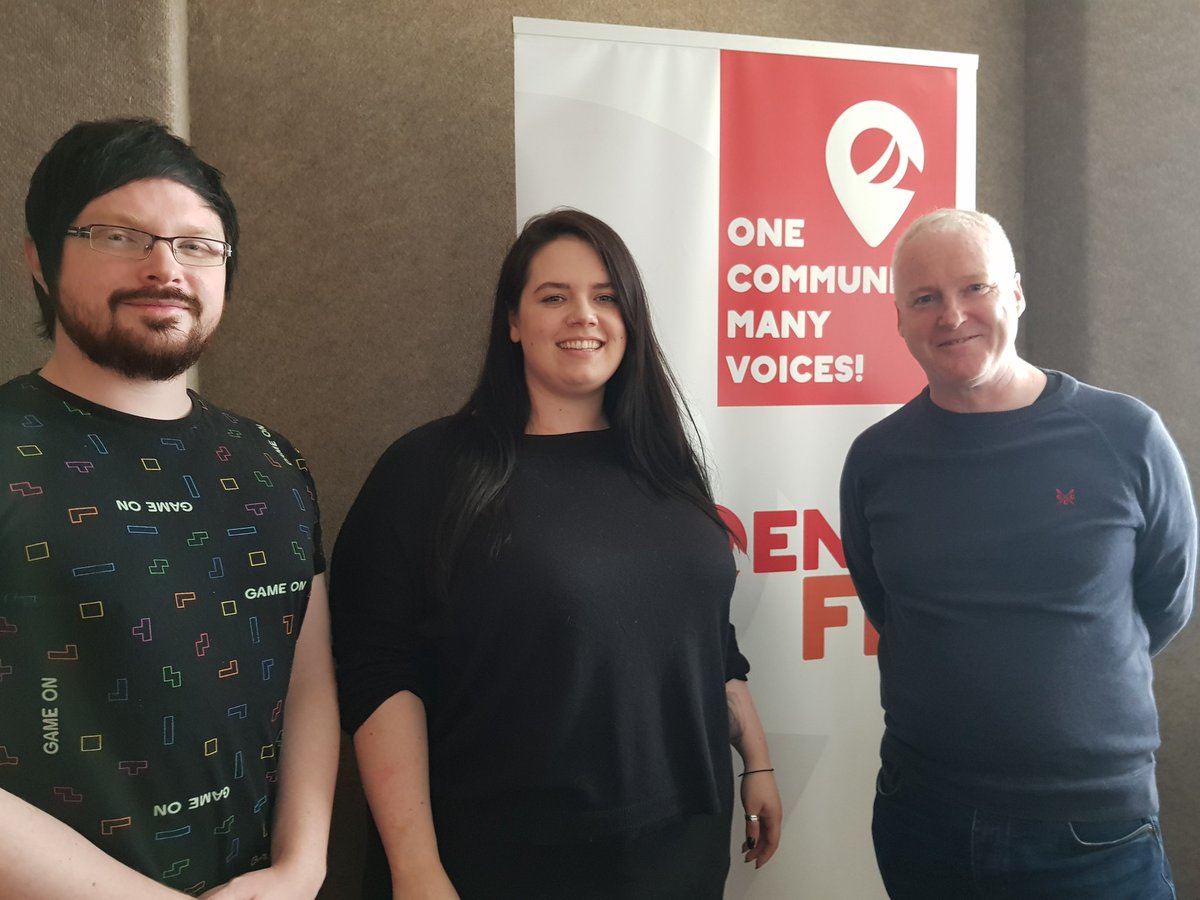
    Our Communications Manager Carla chatted to the guys on Phoenix Fm’s D15today radio show. Here’s the interview if you missed it.


  • The Power of “I Can”

    The Power of “I Can”

    Our Development Office Paul tells us how he harnessed the “I Can” Campaign to overcome his fear of heights

    Recently Siel Bleu launched our very own awareness campaign called “I CAN” empowering through exercise. Our aim with this campaign was simple, we wanted to share stories about the significant impact exercise has had on some of our exercise champions lives. Each exercise champion used the words “I CAN” and stated something they CAN now do that wasn’t possible before they became more physically active with Siel Bleu.

    We had Jennifer (77) a survivor of esophageal cancer, who went from lethargic, stressed and with little or no motivation to an inspirational, self-motivated and confident exerciser. Jennifer’s “I CAN” was that she can now do 150 squats in a day when at her best. Just to clarify that was not a typo, she did indeed do 150 squats in one session….. AMAZING I know!!!! On top of this incredible achievement Jennifer also got more physically active by increasing her walking distances, tracking her steps, attending mindfulness classes and so much more. Starting weekly one to one exercise sessions started Jennifer on a path that she never thought she would be on almost 2 years later. Jennifer was our poster woman for the “I CAN” and has inspired so many others along the way. There’s not a week goes by without someone mentioning her story to me saying I can’t believe how she changed her life around so much just be getting more physically active. I worked with Jennifer a lot at the beginning of her journey and her story only paints half the picture, she really is an inspiration.

    Moving back to the “I CAN” and the reason I wanted to share this story with you was because Jennifer and our other exercise champions have helped to inspire me to find my own I CAN. I’m great at motivating others to achieve their new normal and experience new challenges but it’s hard to look outside of your comfort zone and say what can I do to better myself? Like Jennifer I would like to look back in 2 years and say I never thought that would be me. So what is my “I CAN” you ask? Well it’s not exercise based but equally as challenging I’m facing my fear of heights by performing a Charity Skydive.

    I won’t bore you with my history of falls from heights as a child which helped develop this fear but I will tell you I have not climbed a ladder in the last 20 years nor do I stand while on a plane. Flying is very safe and I’ve been on many flights but I don’t enjoy them full stop. The idea of being in the air just doesn’t do it for me so the idea of a Skydive is terrifying as it brings the flying and the falling together. I spoke with Jennifer about me doing the Skydive and she was great support and it was amazing how our roles as motivator and listener swapped. She was reassuring that I could indeed do it and reminded me of the words “I CAN”.

    Fast forward a few weeks and here I am writing about an experience I never thought about or wanted to do and I have done it! I SURVIVED freefalling from 10,000 feet which I jumped out of what seemed to be an unsafe looking aircraft. I have faced my fear of flying and heights in one go and can say loud and proud “I CAN” face my fears (without crying).

    The Power of the “I CAN” comes in many forms and I want you to find your own “I CAN” be it exercise related or not. Your own “I CAN” should be an achievement no matter how big or small. The testimonials we receive back from our exercises classes isn’t always an “I CAN” related to an exercise achievement , it more so comes in the form of a “I CAN” tie my shoes again, “I CAN” walk to the local shop on my own, “I CAN” climb my stairs again, “I CAN” do my own gardening again. This list of examples can go on and on and everyone CAN do what they set their mind to once they get a little support along the way.

    I would like to thank my family & friends for supporting me through my own “I CAN” and we helped raise money for Siel Bleu Ireland to help more people reach theirs.


    **We’d like to extend a huge thanks to Paul and friends for raising nearly €1000 for Siel Bleu Ireland by facing their fears.

  • Fuel for Fitness Day 5 – Exercise Keeps The Brain Healthy

    Fuel for Fitness Day 5 – Exercise Keeps The Brain Healthy

    Dementia – Exercise keeps the brain healthy

    WHY DO I NEED TO EXERCISE?

    A dementia diagnosis can be a difficult and scary time for a person. However, exercise is one activity which may seem unimportant, but can really help with numerous aspects of the disease. Dementia is due to a deterioration of part of the brain, exercise can help to maintain other parts of the brain not affected by the disease and help retain motor skills. Exercise is also known to help maintain brain function and therefore prevent further progression of dementia.

    Apart from the obvious physical benefits of exercise for people living with dementia, exercise can help with mental and psychological health, especially reducing social isolation. Exercise in a group setting can offer people living with dementia the opportunity to socialise and interact with others. Exercise can also help with mood and sleep patterns.

    At Siel Bleu, we provide a dementia gym class, which focuses on trying to connect the brain with the body again by using exercise as the instruction.

    We try to focus on simple instructions and movements that would mimic day to day activities in order to get the most physical benefits.

    We also do a lot of cognitive work for dementia to improve relationships with interactive games. Some examples are –

    1. Marching of feet at a different speed (this may not seem like an exercise to many, but it can be a difficult task for those with severe dementia)
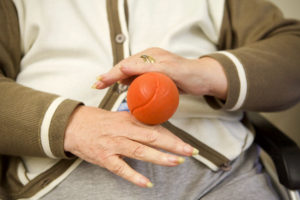
    2. With a ball in your hand, roll it around the back of your hand. Once they are able to this, challenge them by circling the ball around the hand (this can be quite challenging for some)
    3. With the ball, roll it from the back of the hand all the way up to the shoulders
    We also do a lot of exercises around memory and language, allowing participants to learn new skills to further enhance the brain’s function. Sometimes we carry out exercise in Irish, counting numbers or giving an instruction such as up and down to encourage memory stimulation.

    Apart from exercises for older adults with dementia, exercise is also vital to prevent the likelihood of developing dementia. There are numerous studies, which say exercise has an impact on preventing dementia, specifically practised during middle age. There are numerous ways to help prevent dementia such as “exercising” your brain with brain training apps, crosswords and Sudoku and learning a new language, however, exercise can also help by improving socialisation and hand/eye coordination.

    THE DEMENTIA DIET
    People living with dementia might have a different diet, not necessarily because of the disease itself but because of their behaviours towards eating. Many have said eating is the most challenging parts of the entire dementia journey. This could be due to someone continuously forgetting to eat or forgetting they ate already which can lead to being under or overweight. Thus it is important to know whether your loved one is underweight or overweight and list out the meal that is designed for them.

    Try to use plates that have a contrasting colour from the tablecloth and napkin but make sure that there are no patterns on them to reduce distraction. Also, ensure the dining room or area is quiet; a busy room with background noise can be distracting for people with dementia.

    Underweight: They might not be eating because their brain is not sending them the hunger signal.
    1. Finger food will be the best solution. Something that isn’t too much. Such as sandwich but cut small so that it won’t be too overwhelming for them
    2. Small plates with only one or two options can reduce confusion.
    3. Fruits and vegetables as a healthy snack. So they get some sweet and it’s healthy. Best of both worlds!
    4. Make sure they are hydrated all the time. If they can’t feel hunger they won’t be able to say they are thirsty as well
    5. Show your loved one how to carry out the daily task. Remember when giving instruction to a person with dementia, do it only once and allow them the time to process. Repeating instructions can seem like a new instruction and can cause confusion.

    It is possible for a dementia adult to feel hungry all the time because the brain didn’t register that he/she had a meal already. This can lead to them being overweight. There are a few ways to overcome this.
    1. Since they can’t remember they have eaten, cut the portion size smaller so that they can eat regularly. Keep the meal within the recommended calorie allowance
    2. If there are overweight because they love sugary food, try and swapping them with fruits or boiled sugar-free sweets.
    3. Instead of giving them desert all the time, make it a special occasion. Give it to them during birthday or give them low sugar deserts such as sugar-free jelly instead.
    4. Reduce the amount of sauce such as mayonnaise.
    5. It’s best to avoid caffeine and drink mineral or fruit juice or sugar-free soft drinks occasionally.

    DIET AS PREVENTION
    Diet can play a vital role in the prevention of dementia. Here are some foods to introduce into your diet to keep your brain healthy.

    Prevention 1: Green leafy vegetables such as kale, spinach, broccoli and other vegetables rich in vitamin A and C. Consume at least 2 servings per week.

    Prevention 2: Nuts are a good source of healthy fats for the brain especially almonds or walnuts. Maybe that’s why walnut shape like a brain? You can take up to 5 servings a day depending on how much fats you need in your diet. Take note, 12 almonds make up a serving. Avoid coated flavour nut because it defeats the purpose.

    Prevention 3: It’s recommended to eat two servings of blueberries per week.

    Prevention 4: Beans are also recommended as they are packed with fibre and protein and low in calories and fats. They help to keep a person’s mind vigilant. However again the method of preparing a meal with beans should not be too high in sodium.

    Prevention 5: Wholemeal is the go-to carbohydrate! It is packed with fibre and recommended to eat three times a week.

    Prevention 6: It’s recommended to eat oily fish such as salmon, trout or mackerel at least once a week.

    Prevention 7: White meat is also good for the brain. Opt for lean meat such as turkey or chicken and ensuring you remove the skin before eating.

    Prevention 8: Good news to those who love red wine. Research has shown that red wine may be able to help prevent dementia. Hold on though, it’s only one glass per day. Well, better than nothing!

    **Disclaimer: The advice given in this blog is meant as a suggestion only. It is important to ask your doctor/dietitian before making any changes to your lifestyle.