Tag: exercise for older adults

  • How to safely stay active during winter months

    As the colder and darker months set in, staying active becomes just as crucial as it is in the rest of the year. Regular physical activity during winter isn’t just about fitness; it’s essential for maintaining good physical and emotional well-being. Prolonged inactivity can lead to weight gain, poor sleep, low energy, and even seasonal depression.

    To help you stay on track this winter, we’ve compiled practical tips for exercising safely, whether you prefer outdoor adventures or staying cosy indoors.

    Why Exercise During Winter?

    Winter often tempts us to hibernate, but staying active offers invaluable year-round benefits. Physical activity naturally uplifts our mood by releasing endorphins, which are key to combating the winter blues. If you’re feeling more fatigued yet struggling to fall asleep, regular movement can help regulate sleep cycles disrupted by shorter daylight hours.

    Staying active can also strengthen your immune system, helping you fight off seasonal illnesses such as cold or flu.

    Outdoor Exercise Tips for Winter

    Exercising outdoors can be invigorating, but it’s essential to prioritise safety. Here’s how:

    What to Bring

    • Footwear: Waterproof, well-fitted shoes with good ankle support.
    • Socks: Opt for warm, moisture-wicking socks.
    • Clothing: Wear breathable, layered clothing and rainproof outerwear.
    • Essentials: Carry a fully charged phone, snacks, and water.

    Safety Tips

    • Check the weather: Plan your activities based on the forecast.
    • Inform someone: Let friends or family know your route and estimated return time.
    • Stay visible: Wear reflective clothing and carry a flashlight if exercising in low light.
    • Warm up first: A proper warm-up helps prevent injuries in cold weather.
    • Avoid risks: Steer clear of icy paths, slippery surfaces, and poorly lit areas.
    • Bring a buddy: Exercising with a friend adds safety and motivation.

    Explore Your Community

    Indoor Exercise Options

    If braving the cold isn’t for you, indoor exercises are also an excellent way to stay active. At Siel Bleu Ireland, our Siel Bleu At Home programme offers a variety of pre-recorded online sessions, accessible anytime, 24/7, to fit your schedule and keep you moving.

    You can also join 11 live sessions each week, running Monday to Friday, to stay engaged and connected.

    Stay Safe and Have Fun

    Before starting any new exercise routine, consult your GP to ensure it’s appropriate for you. Aim for 150 minutes of moderate physical activity per week and choose activities you enjoy, because having fun is just as important as staying fit!

    This winter, don’t let the cold slow you down. Whether you’re walking in your neighbourhood, joining a local class, or following an at-home routine, staying active is your key to a healthier, happier season.
  • Functional Resistance Training: Heel Raise

    Functional Resistance Training: Heel Raise

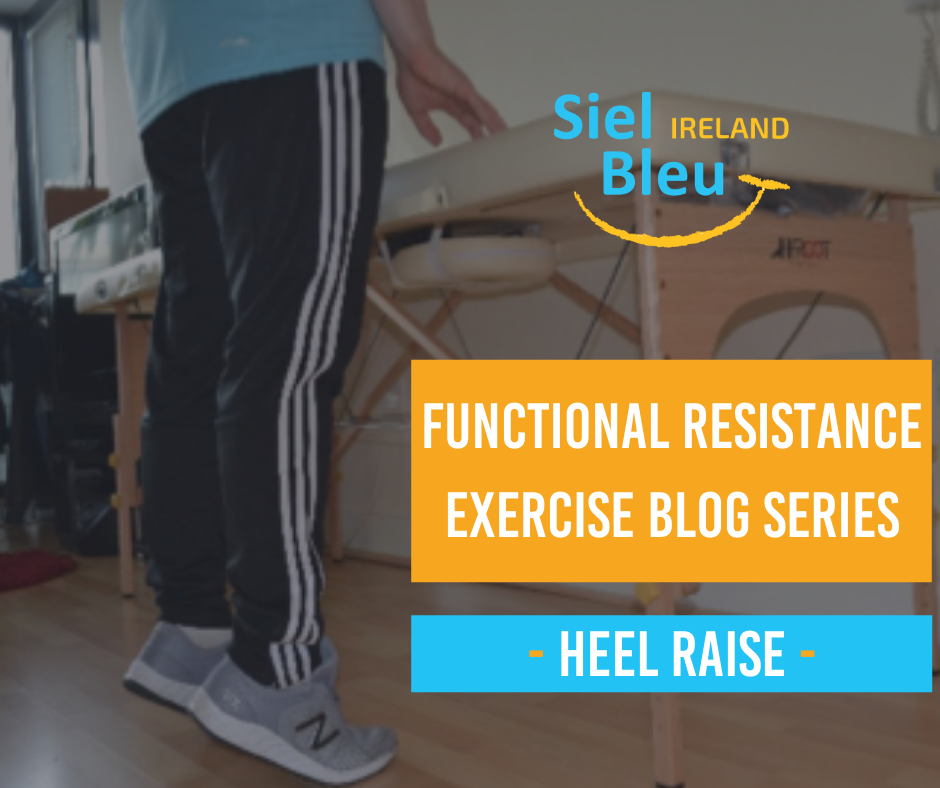
    This is our fifth and last part of the Functional Resistance Training series, and in this episode, we will be discussing the Hell Raise. If there is a chance you haven’t read the previous episodes, you can check them out on our blog.

    Heel Raise

    This is an important exercise promoting balance and lower extremity/knee stability and can be performed both as a muscle-strengthening activity and a balance exercise. The muscle group we are working here is the calf muscles.

    How to Perform Heel Raises:

    Stand with feet flat on the floor, and to begin the movement raise the heels to the maximum height possible, make sure to lift heels off the floor for each repetition. We are aiming for around 12 to 15 repetitions, remember not to worry if we cannot get all 15 reps on the first try. Start at your level and build up to 3 sets of 12-15 reps.

    Progressions:

    Level 1: Face a counter or a wall and places the hands-on either to help with the balance. Lift heels off the floor, hold for 2 – 3 seconds, and return to the start position (flat foot)

    A person standing in a room

Description automatically generated
    A person standing in a room

Description automatically generated

    Level 2: Hoover the hands at the wall or over the counter but do not touch the counter/wall, hold each rep for 2-3 seconds and return to start position.

    A person standing in a room

Description automatically generated
    A person standing in a room

Description automatically generated

    Level 3: Single leg heel raise, lift one leg and perform heel raises on one leg as shown in the pictures, then switch to the other.

    A person standing in a room

Description automatically generated
    A person standing in a room

Description automatically generated

    The Information in the above blog has been adopted from Roetert & Ortega (2019) “Physical Literacy for the Older Adult” published in the Strength & Conditioning Journal.

  • Functional Resistance Training: Carioca Step

    Functional Resistance Training: Carioca Step

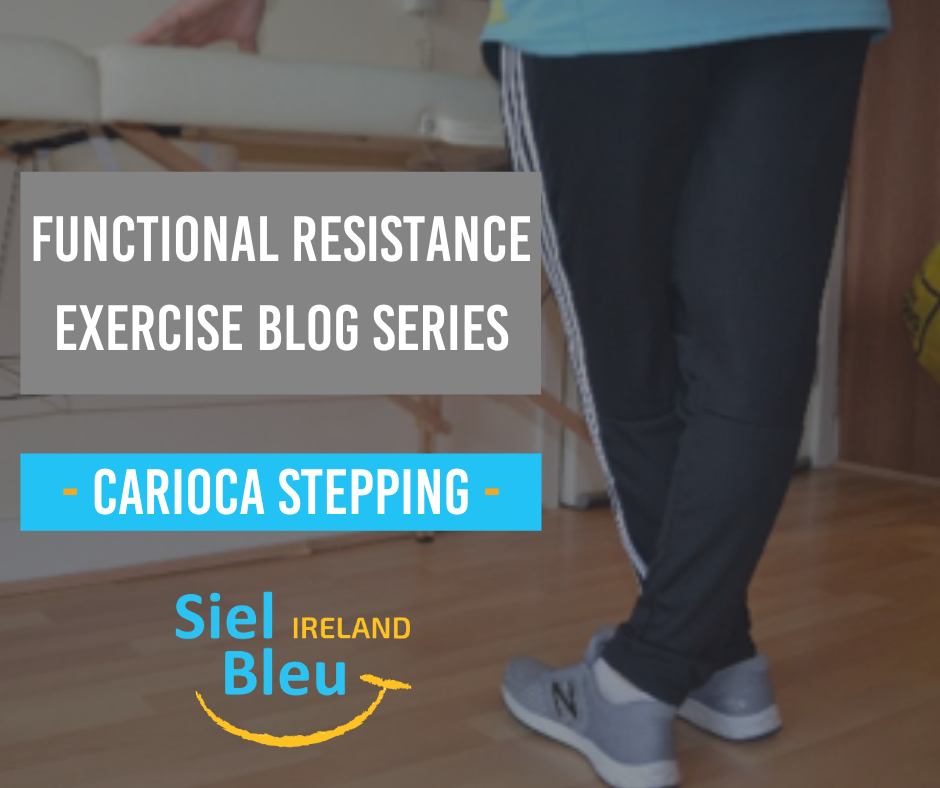
    This is the fourth and our second to last post of the Functional Resistance Training series. In this episode, we will be discussing the Carioca Step. Read back the previous episodes to find out more about Shoulder Retractions, The Bridge and the Partial Squat.

    Carioca Step

    The focus of this exercise is to develop agility and stability and it involves a cross-over step to maintain coordination. This exercise is recommended for older adults already moderately active and not inactive seniors with poor strength and balance, as the activity requires greater skill (strength & balance) to perform. The adequate base of strength and balance/stability should be developed first, and it is recommended to perform the exercise under close supervision/guidance.

    How to perform the Carioca Step

    Stand facing forwards and move the right leg forward and place it in front of the left foot and across the body on the floor. Take the left foot from behind and place it next to the right. Repeat, performing a weave to move 5 steps in one direction. Then do the same, taking the left foot forward and across the right leg on the floor. Move the right leg out from behind and next to the left, weaving across the floor.

    Progressions:

    Level 1: Perform the exercise facing a counter with hands placed on the counter for support.

    A person standing in a room

Description automatically generated
    A picture containing person, indoor, playing, holding

Description automatically generated

    Level 2: Perform the exercise facing the counter, with hand above the counter but not touching the counter.

    A person standing in a room

Description automatically generated

    Level 3: Perform the exercise in an open space and increase speed to increase the difficulty.


    The Information in the above blog has been adopted from Roetert & Ortega (2019) “Physical Literacy for the Older Adult” published in the Strength & Conditioning Journal. 

  • Functional Resistance Training: Partial Squat

    Functional Resistance Training: Partial Squat

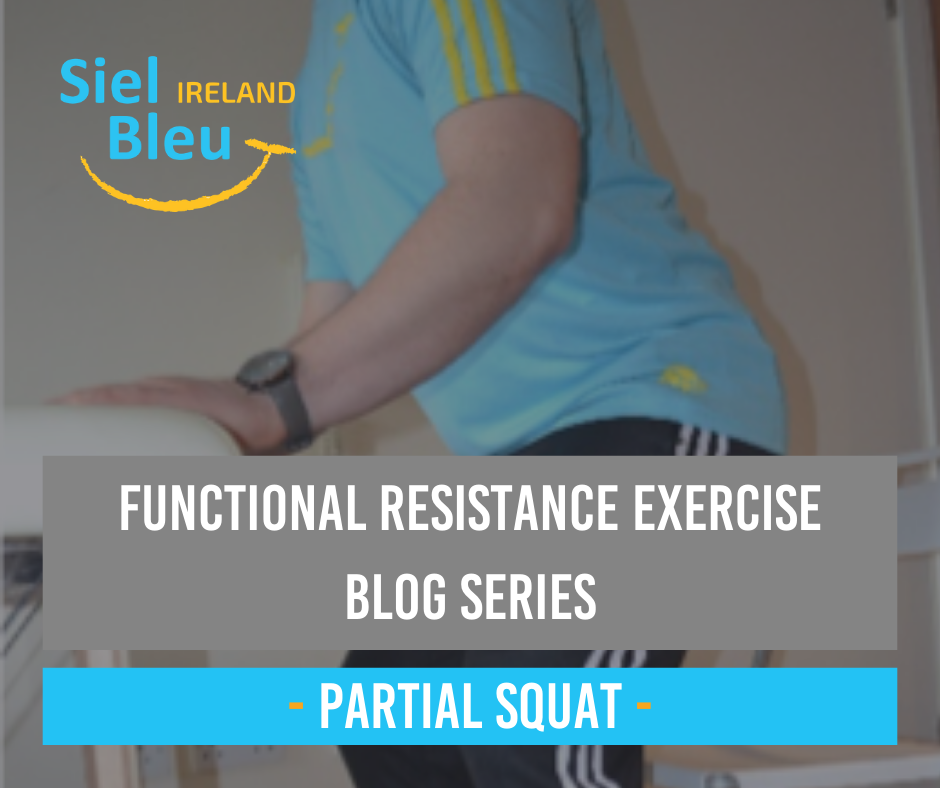
    We are now on the third episode of our Functional Resistance Exercises series and we will be discussing the Partial Squat. If you haven’t already, please read through our previous two posts on Shoulder Retraction and The Bridge exercises.

    Partial Squat

    This is the one exercise that we use daily in our lives, whether it is to sit down on a couch to watch our favourite show, or to sit down to have a cup of tea and a few biscuits, or doing other tasks such as using the toilet, standing up on a bus etc. Being able to squat down and up has a huge impact on improving our dependency and quality and enjoyment of life. Performing this exercise daily will have positive impacts on balance and posture, therefore reducing the risk of falling, which in turn builds confidence while standing and walking.

    How to perform the Partial Squat

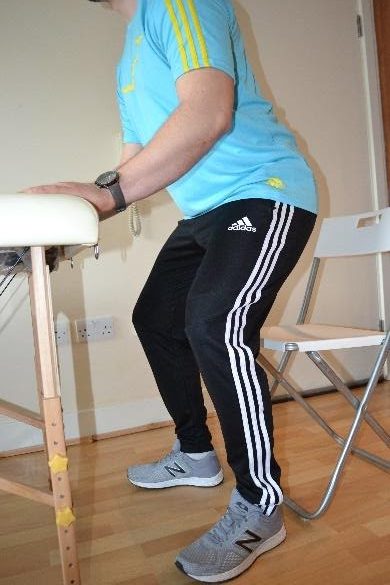
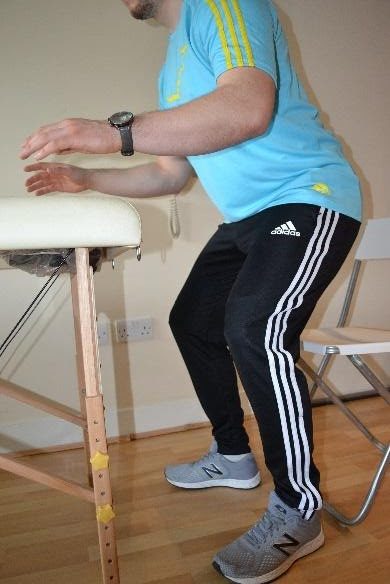
    Stand with the feet shoulder-width apart with a chair placed behind, and a table or chair in front for balance. Push the hips back and bend the knees to descend slowly, keeping an upright posture. Based on ability, bend 20-30° or ¼ of the way. Pause for 2 to 3 seconds and return to the starting position.

    Progressions:

    Level 1: Perform the exercise as described above and focus on the posture throughout the movement.


    Level 2: Same exercise without the use of a chair for balance and support.

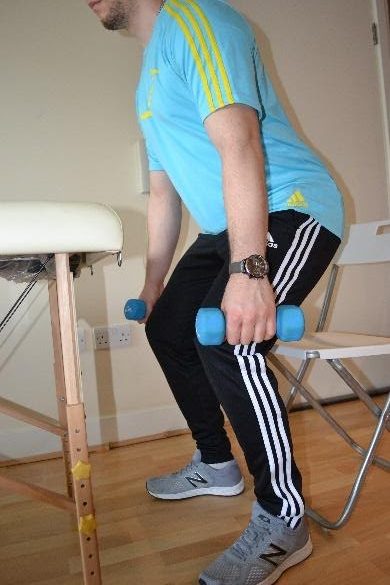
    Level 3: Holding weights (dumbbells) in each hand can further increase difficulty.


    The Information in the above blog has been adopted from Roetert & Ortega (2019) “Physical Literacy for the Older Adult” published in the Strength & Conditioning Journal

  • Functional Resistance Training: The Bridge

    Functional Resistance Training: The Bridge

    This is the second blog post discussing the Functional Resistance Exercises. If you haven’t already, please check out the previous post explaining the Scapular Retraction exercise. If you have done so already, let’s dig into the benefits of the Bridge and how to perform it.

    The Bridge

    Have you ever found yourself lying on the bed, couch or even worse laying on the ground after falling and not being able to get up? To avoid such situations, we need to strengthen the muscles responsible for getting us up, these muscles make up the “posterior chain” (low back, hip extensors, gluteal muscles and hamstrings). The mentioned muscles provide the strength, support and control to raise the hips from the floor, bed or a couch from a supine position (laying on your back). Strengthening these muscles provide significant benefits related to balance, posture and particularly core strength.

    How to perform the Bridge:

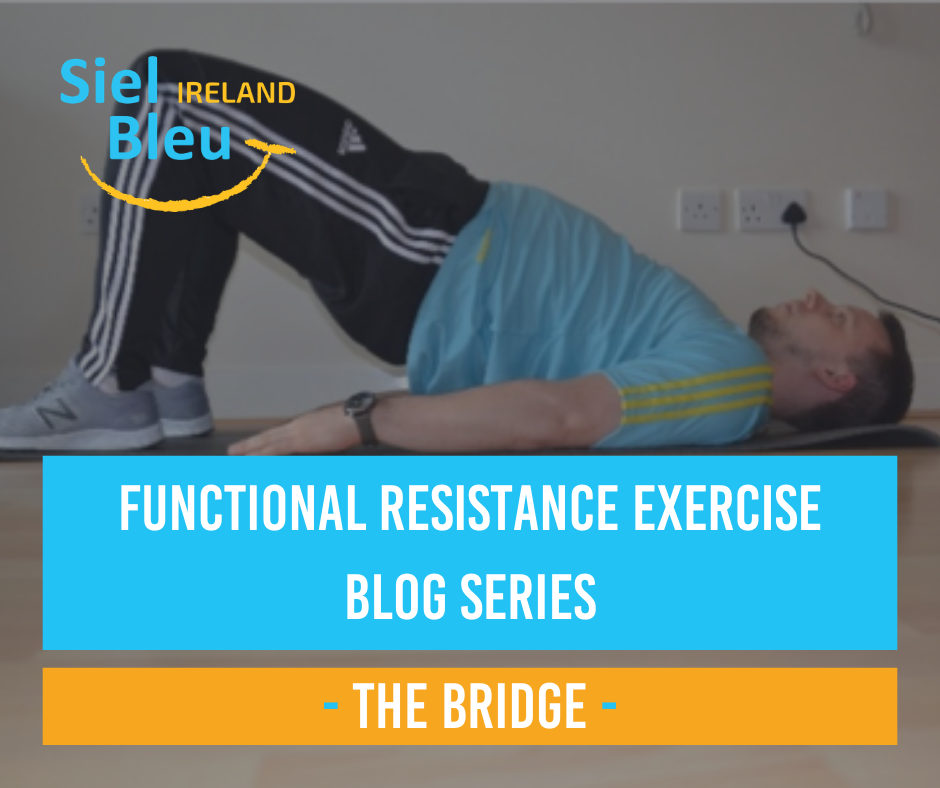
    We’ll start by laying on your back on a firm surface such as an exercise mat or padded floor. From this position we are going to bend the knees we are going to raise the hips toward the ceiling, bringing them in line with the knees and shoulders. The focus is on pushing the feet into the ground while lifting the pelvis. Arms should be kept at the side with palms facing down which will provide stability and shoulders remain on the surface to protect the neck.

    Difficulty:

    Level 1: Lie down on your back with soles of the feet on the floor and knees bent at approximately 90° and raise the hips upward to the ceiling. Press your feet into the ground while lifting the pelvis to bring hips in alignment with the knees and shoulders. Hold the position for 2-3 seconds, then slowly return to the starting position.

    A person lying on the floor

Description automatically generated
    A person lying on the floor

Description automatically generated

    Level 2: While in the “up” position, extend one leg at the knee to bring in alignment with the hips, making sure the pelvis remains level. Do not let one side “drop” or lower when extending the leg. Hold for 2-3 seconds.

    A person lying on the floor

Description automatically generated
    A picture containing indoor, laying, person, table

Description automatically generated

    *Remember we are aiming for 3 sets of 12-15 reps, and it is okay to start with just a couple of reps. Don’t discourage yourself and let’s build-up to 15 reps!

    The Information in the above blog has been adopted from Roetert & Ortega (2019) “Physical Literacy for the Older Adult” published in the Strength & Conditioning Journal. 

  • Functional Resistance Training: Scapular Retraction

    Functional Resistance Training: Scapular Retraction

    Welcome to the Functional Resistance Exercises for the older adult series! As we all know, walking is a great activity which comes with many benefits including improvements in aerobic fitness, strength, and it often has the element of social interaction, all done with minimal to no equipment! Nevertheless, we need to look at other activities to improve our ageing. In this blog series, we will be discussing 5 resistance, posture and balance exercises, referred to as “Functional Resistance Exercises” because they apply directly to activities of daily living giving you the confidence to live a happy, active and independent life!

    Remember to incorporate the exercises with aerobic and flexibility activities which can further enhance the quality of your life!

    The first exercise we are going to discuss is:

    Scapular Retraction

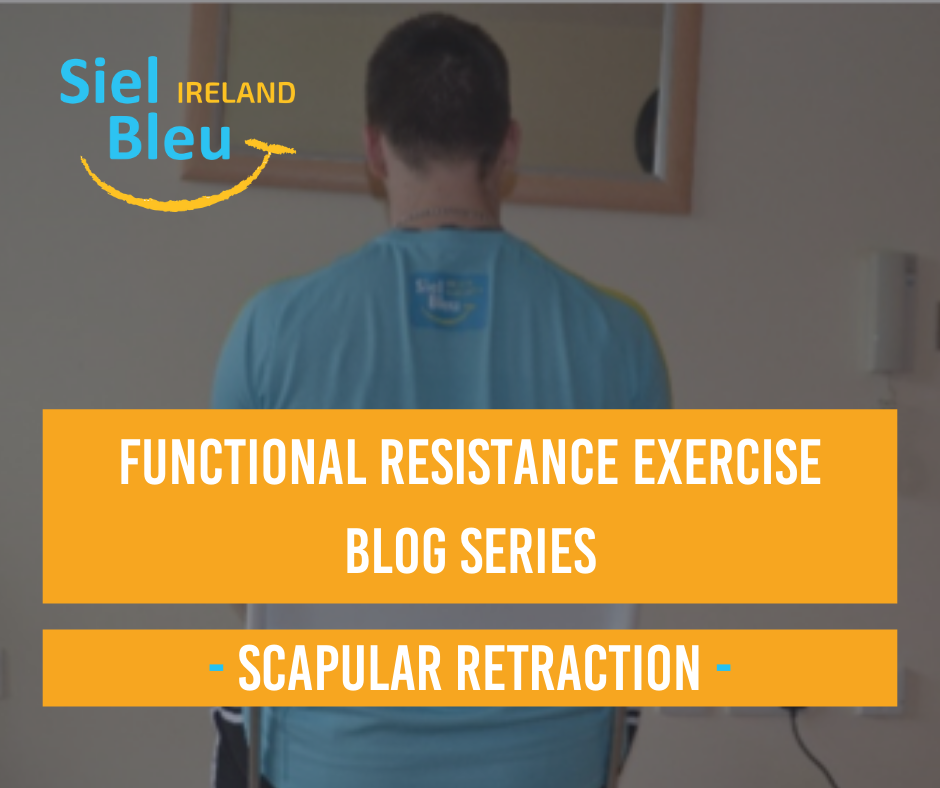
    Don’t be discouraged by the name, all we are doing here is squeezing the shoulder blades back and down (Think of putting your shoulder blades into your back pockets). The main muscles we are working are the rhomboids and trapezius.

    Some important aspects of the Scapular Retraction:

    • This exercise will maintain and improve posture through strengthening the muscles that support the body against the forces of gravity.
    • During this exercise, we work the scapular retractor muscles which are responsible for squeezing the shoulder blades together and pulling the shoulders back into upright positioning.
    • It is an easy exercise and can be performed with or without equipment.
    • It is an integral component of good trunk posture. Strong scapular retractors resist the development of a hunched-forward posture and decrease the strain on the thoracic spine (upper back).
    • Provides additional benefits of promoting good balance, posture, stability and an expanded chest cavity for easier breathing.

    How to perform Scapular Retractions:

    Pull the shoulder back and down (put the shoulder blades in your back pockets and imagine squeezing something between the shoulder blades). 

    Difficulty:

    Level 1: Sit on a chair and squeeze shoulder blades together

    A person standing in a room

Description automatically generated


    Level 2: Stand up straight and raise your arms so that they are level with your shoulders. Bring Arms back slightly so you feel a gentle contraction between the shoulder blades. Turn palms up and hold for 3-5 seconds. Slowly bring arms back to your side.

    A picture containing person, indoor, playing, game

Description automatically generated
    A person playing a video game

Description automatically generated
    A picture containing person, indoor, man, standing

Description automatically generated


    Level 3: Place resistance band around a solid post or a door know of a closed door. Holding each end of the band pull band at waist level with elbows at your side and bring shoulder blades together. Return to starting positions.

    A person standing in a room

Description automatically generated
    A person standing in a room

Description automatically generated

    The goal is to perform 3 sets of 12-15 reps. Don’t worry if you can only get a couple of reps! Use this as your starting point and build up to 3 sets of 15 reps.


    The Information in the above blog has been adopted from Roetert & Ortega (2019) “Physical Literacy for the Older Adult” published in the Strength & Conditioning Journal.

  • Meet the Trainers: Shane Murphy

    Meet the Trainers: Shane Murphy

    This is the third “Meet the Trainers” post which was created to showcase the talent of our awesome trainers. Shane Murphy is in the spotlight this week. His one-year anniversary of working with Siel Bleu Ireland will be this December. Shane currently teaches classes in North Dublin. Get to know about Shane:


    What is your background?

    I’m originally from Belmullet, Co. Mayo (and very proud!) but moved to Dublin to study Sport Science & Health in DCU. I became involved in exercise training with an older population and after graduating, found Siel Bleu to be a perfect match.


    What is your favourite part of the job?

    My favourite part of the job would be bringing smiles to people’s faces on a daily basis. In an ideal world everyone would love to exercise, but it’s not the case. Being able to bring exercise to someone who normally wouldn’t, while making them laugh and enjoy it at the same time is what it is all about. Blood, sweat, tears and laughs!


    What is your favourite exercise to teach? 

    I love working on balance and coordination with groups. I find people may overlook training their balance or think it may never improve. While improvements may be slow to come, consistency is key. Helping those who suffer from a fear of falling to become more confident on their feet is extremely rewarding. Margueritte, one of our senior trainers, recently wrote a brilliant blog post on the importance of balance training. 


    Do you have a memorable story from your experience thus far at Siel Bleu? 

    No one single event stands out, but when I started with Siel Bleu, I was told to keep a journal for all the fantastic stories and events that happen on the job. I didn’t, but I am sure that it would be full with stories by now. Each class brings a new laugh each day!

  • Brain Power: The Benefits of Exercise

    The brain, also known as our coordinating centre of sensation, intellectual, and nervous activity, is what maintains our thinking, memory, and functioning capabilities. When we are younger, we have all of these intact, and never have to think twice about the operational capacities of our brains. Yet, as we grow older this looming issue becomes more prevalent, and we have to actively work harder to preserve these properties. What if there was a way to do this, where the benefits are two-fold? A main approach to keeping your brain healthy, and sharp into our older years is through the means of exercise!

    When we are exercising we are gradually increasing our heart rate, and breathing, creating more oxygen into our bloodstream. From there, more oxygen goes to the brain leading to the production of neurons, where memory and thinking are controlled. This process increases your cognitive reserve which is the brain’s ability to improvise and find alternate ways to get the job done. It has been found that the greater the cognitive reserve, the better we are able to starve off symptoms of degenerative brain changes associated with dementia, Parkinson’s disease, multiple sclerosis, or a stroke. For this reason, many rehabilitation, or treatments surrounding these involve some form of exercise.

    Another reason why being active helps your brain, is it leads to greater brain plasticity. This is the brain’s ability to change and adapt as a result of an experience. In other words, it allows the brain to modify, or rewire itself. Without this, the human brain would be unable to develop through adulthood, or recover from a brain injury. Also, working out increases serotonin (happy hormone), and norepinephrine (stress hormone), which boosts information processing, and mood. This is why we constantly here the saying, “You will never regret a workout,” because we will always feel better after exercising. Also, many of our participants who have had mood swings due to strokes, or chronic conditions, mention how the exercises have greatly improved their mood.

    Gomes-Osman, and her colleagues looked at 98 studies that involved over 11,000 participants that were on average 73 years old, which tested the benefits of exercise on the brain. 59 percent of the participants were deemed clinically healthy, whereas the others had some form of a degenerative brain disease. They found that at least 52 hours of exercise over an average of 6 months can lead to better processing speed, which refers to the amount of time the brain needs to process information, or carry out a task. Also, the healthy individuals showed improvement in their executive function, which is the brain’s ability to plan ahead, set, and achieve goals, as well as come up with strategies. As far as exercise type (aerobic, yoga, or strength), they were equally beneficial for the senior’s thinking skills.

    Overall, exercise is multifaceted, as it helps both the body, and the mind. Even though it is scary to face our own time clocks, and there are many things out of our control, exercise is the one thing we have the choice to do. The best gift we can give ourselves, and others is the gift of health, and working out is the easiest, and cost effective way to do so.

    If you are interested in our programmes go to: https://www.sielbleu.ie/home/programmes/

    Sources: 

    https://www.google.com/search?q=brain+definition&rlz=1C1CAFB_enUS660US664&oq=brain+defin&aqs=chrome.1.69i57j0l5.16884j1j7&sourceid=chrome&ie=UTF-8

    https://www.health.harvard.edu/mind-and-mood/what-is-cognitive-reserve

    https://www.health.harvard.edu/blog/regular-exercise-changes-brain-improve-memory-thinking-skills-201404097110

    https://www.medicalnewstoday.com/articles/321981.php

    https://www.psychologytoday.com/us/blog/the-fifth-vital-sign/201901/why-exercise-is-good-your-brain

    https://www.verywellmind.com/what-is-brain-plasticity-2794886


  • Exercise myths about older adults

    Exercise myths about older adults

    Welcome to Siel Bleu’s myth buster addition! Many people have fears, and speculations when it comes to working out, especially into an older age. In this blog, we are going to go over the common myths that surround this topic, and the actual truths behind them.

    Myth: Exercise isn’t safe for someone my age

    Actually, not moving is much riskier and can speed up the ageing process. When you are inactive, you start to lose strength, stamina, and balance. This in turn leads to issues like falls, which is the third leading cause of chronic disability, and loss independence. Yet, it has been shown that regular exercise, prevents loss of bone mass and improves balance, actually reducing your risk of falling.

    In one particular study, they took 344 adults, 70 and older, who previously had three falls. The older adults took part in a simple resistance training programme over a 6 month period. The result?  The study showed that participants were less likely to experience repeat falls. Also, as a secondary benefit they improved in areas of cognitive function. Doctor Teresa Liu-Ambrose, who conducted this study adds, “Older adults who experience falls are medically complex and at high risk for both morbidity and mortality, and we demonstrated that exercise is a practical and cost-effective intervention that can improve older peoples’ outcomes after a significant fall.” Remember, the more physically fit you are, the less likely you are to get injured.

    Myth: It’s too expensive

    In all reality, exercise saves you money! By staying active, it has been shown that you will have less medications, hospital visits, and are able to stay independent longer, reducing the need for long term care. You don’t have to spend money to exercise, simply getting out of the house and going for a walk is beneficial. Or try some simple movement exercises while watching the TV.

    Also, due to Siel Bleu being a nonprofit, our exercise classes are affordable, allowing most people to participate. In addition to the classes, many of our participants exercise at home, which in turn saves money from having to get a gym membership. Checkout our newsletter here, where you can sign up and receive 3 free at home exercise programmes: http://bit.ly/newslettersbi

    Myth: I have never exercised before, it’s too late to make a difference in my health

    Many people think that symptoms, such as weakness, or loss of balance, are strictly caused by old age. While it is true that as you get older, our body’s functionality can decline, physical activity helps to slow any further decline.

    Yet, there is good news! It has been shown that even if someone decided to exercise after being physically inactive, the benefits of longevity would still be significant. For example, in a study in the UK, it was found that even people in their nineties living in a nursing home boosted muscle strength after starting an exercise routine! Another thing to keep in mind is that beginners see that most amount of progress when starting out, compared to those who are experienced. This demonstrates at any point in life being active is advantageous for your health.

    Myth: I’m not fit enough to attend an exercise class

    Most people who start an exercise class, have either no exercise experience, or very little. When you attend a Siel Bleu exercise class, you will see that everyone comes from diverse walks of life, and have different abilities. Also, our trainers are highly educated, having to obtain at least a Bachelors in Exercise Science, and are trained by Siel Bleu standards. Due to this, trainers will find modifications for you if you are unable to do an exercise, and each class is done at your own pace. On top of that, you get the added benefit of exercising with a group which is motivating, holds you accountable, and allows you to build relationships with the other participants. Also, as many of our I Can champions pointed out last week, you have to start somewhere!

    Sources:

    https://www.helpguide.org/articles/healthy-living/exercise-and-fitness-as-you-age.htm

    https://www.medicalnewstoday.com/articles/325610.php?fbclid=IwAR0tf4jebUWCXVQWDHCBHuCiCfdVm1Pp5p9qBHO9LsXkYiRFjerHPvYTFgk

    https://www.nhs.uk/live-well/exercise/exercise-as-you-get-older/

    https://www.bbc.com/news/health-47331544

    https://www.webmd.com/fitness-exercise/guide/exercise-and-aging-myths#1

    https://www.webmd.com/healthy-aging/features/exercise-older-adults#2

    http://aginginstride.enewsworks.com/en/10047/articles/2456/Top-10-Myths-About-Seniors-and-Exercise.htm

    https://www.belmarrahealth.com/home-exercise-program-lowers-fall-risk-elderly/?fbclid=IwAR0qIJlMXb-aJ0JK1YFxtssBI23BWc6KflvREkdiFsK7x76YjNpMC-Y2XaA

  • Keeping Your Confidence

    Keeping Your Confidence

    Stay and Boost Confidence in Yourself

    Gaining confidence is like a rollercoaster throughout our lives. Usually, it starts off a bit low but then as we start getting older it reaches its peak. Around the age of 55 to 65 is when we are the most confident in ourselves. However, around the age of retirement, our confidence can start to decline. To keep self-esteem high requires constant attention and motivation. This does not change when we age. We have a few ways to help older adults’ confidence.

    WAYS TO KEEP YOUR CONFIDENCE:

    Hang Out with Friends or Your Furry Friends

    We have talked about the numerous benefits of having a friend (it can be a furry friend). But did you know that having someone to spend time with can boost your self-esteem? Loneliness is a common symptom of ageing. We recently wrote a blog post on how to combat loneliness. Nevertheless, exercising with other people is just one way to decrease the feeling of loneliness, you can also try setting up and weekly stop at a café with a friend or just seeing friends throughout the week can help increase your confidence.

    Take Care of Yourself

    Unsurprisingly taking care of yourself can help older adults’ confidence. If you feel good about yourself, you will increase your self-esteem and confidence. There is more to taking care of yourself than exercise. Good hygiene, a healthy diet and regular consistent exercise all contribute to your overall health. Find something that you enjoy doing regularly that has some exercise aspect to it and you will find it much easier to take care of yourself.

    Learn Something New

    No one wants to live a boring life. Staying active and interested in the world we live can add to our lives. Make it a goal every day to learn or try something new every day. It can be as simple as trying new food, walking a different route or reading a new book.

    Ignore The Negative Stereotypes

    People are always telling older adults what they can and cannot do. You know what you are capable of, so listen to yourself and your body. If you feel like you are up for a harder workout try it if you feel like you are a bit sorer and stiffer than normal take it easy. You know what is best for you so kick those stereotypes to the curb. If you believe in yourself that’s all that matter, you will see your self-confidence skyrocket.

    Self-esteem and self-confidence and hard to keep high. With a good support system around you, taking care of yourself, always trying to push yourself and squashing stereotypes you will find your self-confidence to stay high.