Category: Confidence

  • Setting SMART Goals


    “Momentum breeds success.” – Suzy Kassem

    Goals are great, but in order to reach them, we need to ensure we set ourselves up for success. How do we do this? By creating momentum. While motivation gets us started on the path toward a goal, momentum keeps us on that path and prevents us from veering off course. 

    How can we build momentum towards a goal? By looking at ways to make our environment as supportive as possible. Let’s take ‘getting more exercise’ as an example:

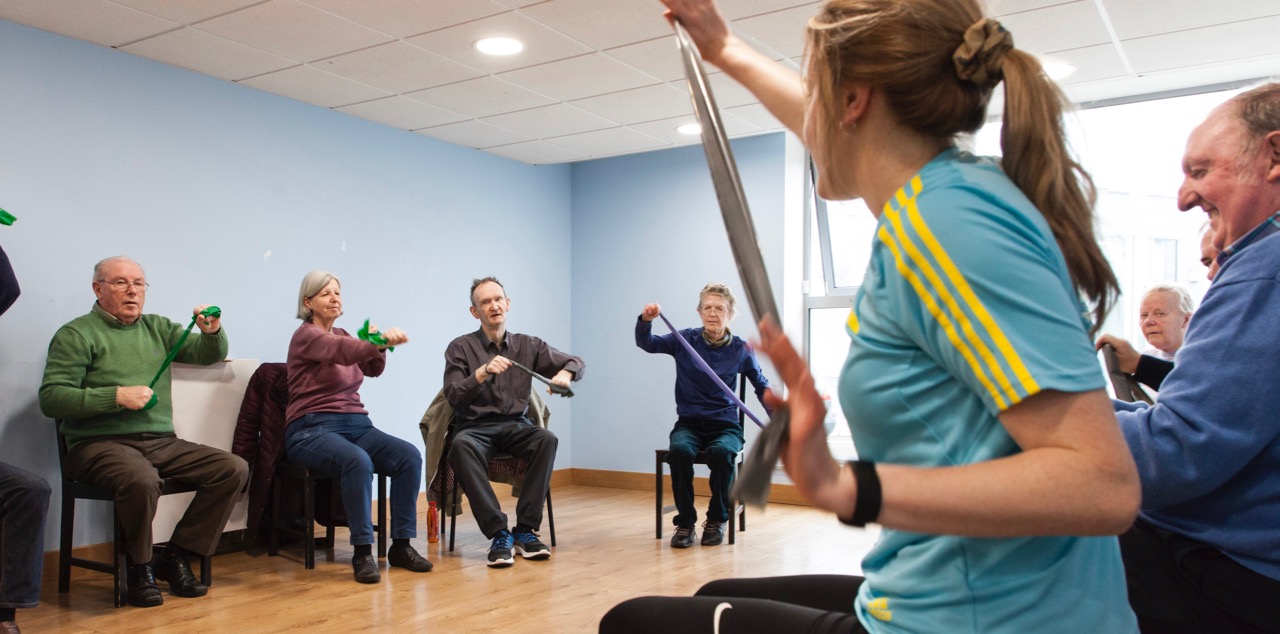
    • Seek out ways to connect with like-minded people (our Siel Bleu at Home online exercise classes are a great option!)
    • Consider investing in some training clothes and footwear, and have these ready the night before a workout
    • Make family and friends aware of your goal; this holds you accountable and allows you to draw on the support and encouragement of others when needed.
  • Functional Resistance Training: Heel Raise

    Functional Resistance Training: Heel Raise

    This is our fifth and last part of the Functional Resistance Training series, and in this episode, we will be discussing the Hell Raise. If there is a chance you haven’t read the previous episodes, you can check them out on our blog.

    Heel Raise

    This is an important exercise promoting balance and lower extremity/knee stability and can be performed both as a muscle-strengthening activity and a balance exercise. The muscle group we are working here is the calf muscles.

    How to Perform Heel Raises:

    Stand with feet flat on the floor, and to begin the movement raise the heels to the maximum height possible, make sure to lift heels off the floor for each repetition. We are aiming for around 12 to 15 repetitions, remember not to worry if we cannot get all 15 reps on the first try. Start at your level and build up to 3 sets of 12-15 reps.

    Progressions:

    Level 1: Face a counter or a wall and places the hands-on either to help with the balance. Lift heels off the floor, hold for 2 – 3 seconds, and return to the start position (flat foot)

    A person standing in a room

Description automatically generated
    A person standing in a room

Description automatically generated

    Level 2: Hoover the hands at the wall or over the counter but do not touch the counter/wall, hold each rep for 2-3 seconds and return to start position.

    A person standing in a room

Description automatically generated
    A person standing in a room

Description automatically generated

    Level 3: Single leg heel raise, lift one leg and perform heel raises on one leg as shown in the pictures, then switch to the other.

    A person standing in a room

Description automatically generated
    A person standing in a room

Description automatically generated

    The Information in the above blog has been adopted from Roetert & Ortega (2019) “Physical Literacy for the Older Adult” published in the Strength & Conditioning Journal.

  • Functional Resistance Training: Partial Squat

    Functional Resistance Training: Partial Squat

    We are now on the third episode of our Functional Resistance Exercises series and we will be discussing the Partial Squat. If you haven’t already, please read through our previous two posts on Shoulder Retraction and The Bridge exercises.

    Partial Squat

    This is the one exercise that we use daily in our lives, whether it is to sit down on a couch to watch our favourite show, or to sit down to have a cup of tea and a few biscuits, or doing other tasks such as using the toilet, standing up on a bus etc. Being able to squat down and up has a huge impact on improving our dependency and quality and enjoyment of life. Performing this exercise daily will have positive impacts on balance and posture, therefore reducing the risk of falling, which in turn builds confidence while standing and walking.

    How to perform the Partial Squat

    Stand with the feet shoulder-width apart with a chair placed behind, and a table or chair in front for balance. Push the hips back and bend the knees to descend slowly, keeping an upright posture. Based on ability, bend 20-30° or ¼ of the way. Pause for 2 to 3 seconds and return to the starting position.

    Progressions:

    Level 1: Perform the exercise as described above and focus on the posture throughout the movement.


    Level 2: Same exercise without the use of a chair for balance and support.

    Level 3: Holding weights (dumbbells) in each hand can further increase difficulty.


    The Information in the above blog has been adopted from Roetert & Ortega (2019) “Physical Literacy for the Older Adult” published in the Strength & Conditioning Journal

  • Functional Resistance Training: The Bridge

    Functional Resistance Training: The Bridge

    This is the second blog post discussing the Functional Resistance Exercises. If you haven’t already, please check out the previous post explaining the Scapular Retraction exercise. If you have done so already, let’s dig into the benefits of the Bridge and how to perform it.

    The Bridge

    Have you ever found yourself lying on the bed, couch or even worse laying on the ground after falling and not being able to get up? To avoid such situations, we need to strengthen the muscles responsible for getting us up, these muscles make up the “posterior chain” (low back, hip extensors, gluteal muscles and hamstrings). The mentioned muscles provide the strength, support and control to raise the hips from the floor, bed or a couch from a supine position (laying on your back). Strengthening these muscles provide significant benefits related to balance, posture and particularly core strength.

    How to perform the Bridge:

    We’ll start by laying on your back on a firm surface such as an exercise mat or padded floor. From this position we are going to bend the knees we are going to raise the hips toward the ceiling, bringing them in line with the knees and shoulders. The focus is on pushing the feet into the ground while lifting the pelvis. Arms should be kept at the side with palms facing down which will provide stability and shoulders remain on the surface to protect the neck.

    Difficulty:

    Level 1: Lie down on your back with soles of the feet on the floor and knees bent at approximately 90° and raise the hips upward to the ceiling. Press your feet into the ground while lifting the pelvis to bring hips in alignment with the knees and shoulders. Hold the position for 2-3 seconds, then slowly return to the starting position.

    A person lying on the floor

Description automatically generated
    A person lying on the floor

Description automatically generated

    Level 2: While in the “up” position, extend one leg at the knee to bring in alignment with the hips, making sure the pelvis remains level. Do not let one side “drop” or lower when extending the leg. Hold for 2-3 seconds.

    A person lying on the floor

Description automatically generated
    A picture containing indoor, laying, person, table

Description automatically generated

    *Remember we are aiming for 3 sets of 12-15 reps, and it is okay to start with just a couple of reps. Don’t discourage yourself and let’s build-up to 15 reps!

    The Information in the above blog has been adopted from Roetert & Ortega (2019) “Physical Literacy for the Older Adult” published in the Strength & Conditioning Journal. 

  • Exercising & Where to Start

    Exercising & Where to Start

    As we’re all aware, there are a multitude of benefits from exercising as an older adult or someone with a chronic medical condition, and it’s never too late to start. Exercise is a key component in maintaining and improving your health and quality of life, regardless of age or condition. It can potentially add years onto your life or increase your independence. This is why our organisation offers a wide array of classes designed for all different ages, conditions and ability levels. There’s benefits to each of them, but often before you start it’s important to know what course would be best for you.

    The way we typically categorise our programmes is in terms of dependency, and what a participant is already physically doing prior to starting a Siel Bleu Ireland class. If you’re already pretty active in your day-to-day life, we have Stay Active, a programme designed specifically for the most active older adults. The specifics of the programme often adjust depending on the needs of the group that is taking it; however, its main objectives are to maintain and improve participants’ physical conditions. For participants who want a change of scenery during class, we also offer an Up & Go programme, geared to work on participants’ cardiovascular help along with their resistance and handling of their body weight. Our Fall Prevention programme focuses on coordination and balance, working toward limiting and preventing any falls participants have in the future.

    While the courses mentioned above are designed for more active, independent participants, that is not to say that we don’t have courses for all ability levels. For individuals with mobility issues — whether that be the use of a wheelchair, a walker or otherwise — we have our Chair Gym programme. This programme helps participants maintain their independence and receive the benefits of a full body workout even while sitting. We also offer one to one programmes, which are catered for participants who may want more individualised attention and would benefit from exercising in the comfort of their own home.

    Furthermore, we also offer courses to people with many different conditions. Participants living in a wheelchair, with dementia or Alzheimer’s disease, COPD, Parkinson’s disease, arthritis, or having just survived a stroke can all exercise with us, through our patient group programmes. These programmes strive to meet the needs of many participants, and we’re proud to be in collaboration with so many wonderful organisations that are passionate about helping them.

    At Siel Bleu Ireland we recognise the capacities and needs of the people we serve are varied, which is precisely why we offer so many uniquely tailored programmes. Sometimes it can be a bit difficult or daunting to figure out how and where to start exercising, which is why we aim to be as informative as possible. If you would like to know more about any of our programmes, especially if you believe yourself or someone in your life could benefit from one of them, we encourage you to visit our site and find a class near you. Furthermore, if you have any questions, we are always available to answer them via email, phone or social media.  

    Sources: 

    https://pmj.bmj.com/content/90/1059/26

    https://www.mayoclinic.org/healthy-lifestyle/fitness/in-depth/exercise-and-chronic-disease/art-20046049

    ***Disclaimer: The information in this post is for reference only and is not intended to be a substitute for medical expertise or advice. If you have any concerns about your own or another’s health, then please contact your doctor.

  • Keeping Your Confidence

    Keeping Your Confidence

    Stay and Boost Confidence in Yourself

    Gaining confidence is like a rollercoaster throughout our lives. Usually, it starts off a bit low but then as we start getting older it reaches its peak. Around the age of 55 to 65 is when we are the most confident in ourselves. However, around the age of retirement, our confidence can start to decline. To keep self-esteem high requires constant attention and motivation. This does not change when we age. We have a few ways to help older adults’ confidence.

    WAYS TO KEEP YOUR CONFIDENCE:

    Hang Out with Friends or Your Furry Friends

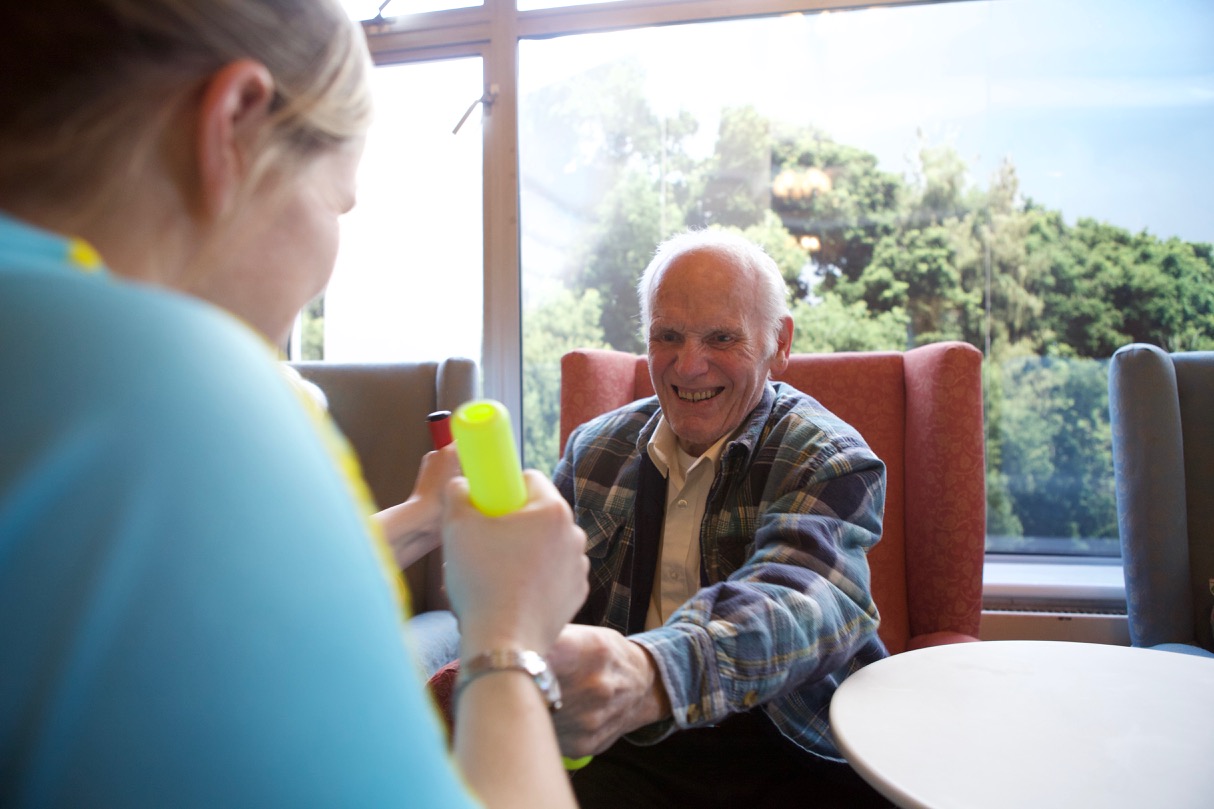
    We have talked about the numerous benefits of having a friend (it can be a furry friend). But did you know that having someone to spend time with can boost your self-esteem? Loneliness is a common symptom of ageing. We recently wrote a blog post on how to combat loneliness. Nevertheless, exercising with other people is just one way to decrease the feeling of loneliness, you can also try setting up and weekly stop at a café with a friend or just seeing friends throughout the week can help increase your confidence.

    Take Care of Yourself

    Unsurprisingly taking care of yourself can help older adults’ confidence. If you feel good about yourself, you will increase your self-esteem and confidence. There is more to taking care of yourself than exercise. Good hygiene, a healthy diet and regular consistent exercise all contribute to your overall health. Find something that you enjoy doing regularly that has some exercise aspect to it and you will find it much easier to take care of yourself.

    Learn Something New

    No one wants to live a boring life. Staying active and interested in the world we live can add to our lives. Make it a goal every day to learn or try something new every day. It can be as simple as trying new food, walking a different route or reading a new book.

    Ignore The Negative Stereotypes

    People are always telling older adults what they can and cannot do. You know what you are capable of, so listen to yourself and your body. If you feel like you are up for a harder workout try it if you feel like you are a bit sorer and stiffer than normal take it easy. You know what is best for you so kick those stereotypes to the curb. If you believe in yourself that’s all that matter, you will see your self-confidence skyrocket.

    Self-esteem and self-confidence and hard to keep high. With a good support system around you, taking care of yourself, always trying to push yourself and squashing stereotypes you will find your self-confidence to stay high.