Tag: exercise for older people

  • Fuel for Fitness Day 5 – Exercise Improves COPD Symptoms

    Fuel for Fitness Day 5 – Exercise Improves COPD Symptoms

    COPD

    I LIVE WITH OXYGEN 24HRS A DAY, CAN I STILL EXERCISE?

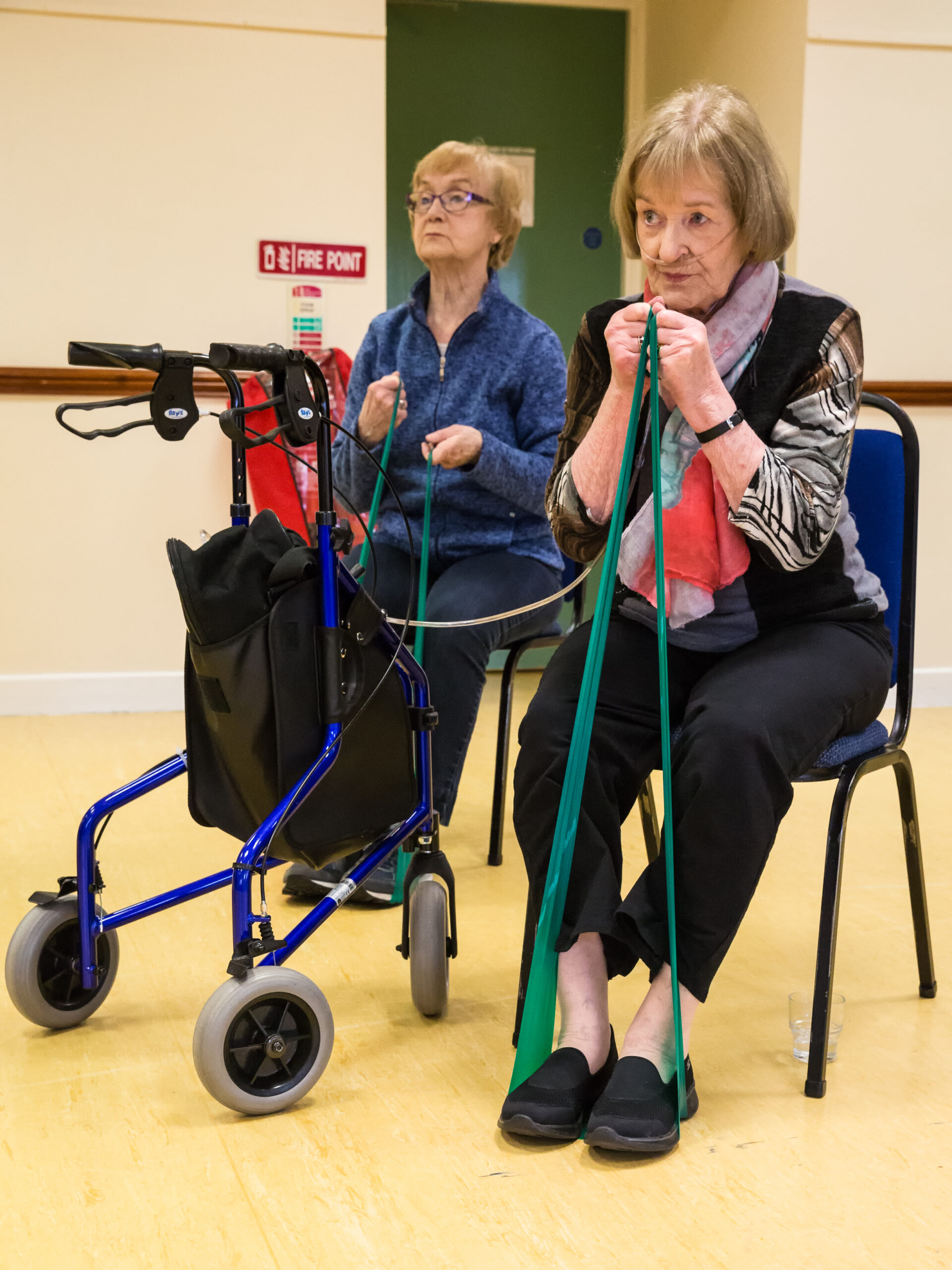
    It is such a mystery how the body works. People often have this misconception that exercise will aggravate the shortness of breath for someone living with COPD. On the contrary, exercise helps. When you exercise, the heart beats faster, blood will transport oxygen around the body. There is a spiral of decline associated with COPD. People believe they cannot exercise and therefore don’t. This, in turn, can worsen symptoms and result in more sedentary behaviours. It is therefore recommended that people living with COPD practice physical activity and especially aerobic exercises.

    What is an aerobic exercise you might ask? It’s an exercise that requires the pumping of oxygenated blood by the heart to the muscles. Examples of aerobic exercises are walking, swimming, hiking and even dancing. However, it is important to seek medical advice before carrying out any exercise. Your doctor might need to change the oxygen flow from your tank. Aerobic exercises help participants to open their airways which helps to reduce shortness of breath associated with the disease.

    At Siel Bleu, our Exercise, COPD & Me classes run in the community with people who are living at home. Here we find the exercises bring the people together and help them form a better support network. At some classes, there is a shop that sells cuppa. Other classes have participants bringing in biscuit to enjoy with the cuppa at the end of the classes.

    Having something to look forward to will certainly improve your mood and lungs capacity when engaging in physical activity.

    Our biggest achievements we have experienced with our participants is the termination of continuous oxygen usage, only on exertion. John from COPD Bray was on oxygen 24 hours a day, using up to a tank of oxygen a day; today John only requires oxygen when he’s exercising or gardening and uses about 1 tank a month. What an accomplishment!

    THE COPD DIET
    It is really important to care for your own diet when you have COPD as extra weight might increase your shortness of breath. Extra weight in the chest and abdomen increases the work of the muscles, hence, it is important to maintain an ideal weight.

    However, losing weight drastically is not ideal either as it can make you weak. Talk to your GP about your weight and get advice from them. Here are a few general tips. Bear in mind that these tips are written without taking any conditions into consideration.

    1. It’s important to monitor the different elements that go into food such as sugar and sodium, not just calories. The food may be low in calories but high in sugar, which is an attribute for diabetes.

    2. Avoid fad diets. This actually goes for everyone. As tempting as it seems, losing 10kg in a week is not healthy for your body and mental health. Your body won’t be able to keep up with the drastic change and you might even fall sicker. Prepare foods which are appealing to the eye such as adding purple cabbage, red pepper, sweet corn, carrot and lettuce. Shred some lean meat and mix with a simple vinaigrette dressing.

    3. Studies have shown that people with COPD need vitamin C, D and E. That being said, don’ forget to have at least 5 serving of fruits and vegetables.

    4. For those who exercise, it is important that you eat protein such as lean meat, eggs and oily fish.

    5. Dietitian recommends older adults to eat a smaller portion of meal every 2 hours. This way you won’t get hungry easily and you won’t get shortness of breath too.

    6. Limit sodium intake because salt can cause fluid retention that will worsen the effect of shortness of breath.

    7. Don’t forget to hydrate yourself all the time. Keep a bottle close by and sip it as you go. Keep yourself hydrated all the time.

    **Disclaimer: The advice given in this blog is meant as a suggestion only. It is important to ask your doctor/dietitian before making any changes to your lifestyle.
  • Fuel for Fitness Day 4 – Exercise Is Key To Men’s Longevity

    Fuel for Fitness Day 4 – Exercise Is Key To Men’s Longevity

    A dedication to all the men out there!

    THE IMPORTANCE OF EXERCISE FOR OLDER MEN

    It is important to place emphasis on exercise when we’re younger. Exercise areas are readily accessible. Be it going to a gym, playing a team sport, hiking or whatever your preferred physical activity is. As we age the public emphasis can diminish. But actually, it’s equally if not more important to practice regular physical activity as we age. Worldwide, physical inactivity accounts for about 3.2 million deaths per year. Remember, exercise is the key to men’s longevity.

    Recent studies have shown that exercise is, in fact, the key to longevity for older men. However, it doesn’t have to be as strenuous as you may think to gain the benefits. Even a half hour of light physical activity can reduce mortality odds by 17%.

    With so many exercise activities targeted at women, what type of exercise is important for older men? How can they access it?

    Some of the guidelines for older adults can seem overcomplicated. We have simplified it into a few easy points of which exercise and why –

    1. Get Moving – Walk at least 30 minutes a day, try uphill if you can to improve endurance
    2. Use Those Muscles – Add in some strength based work including
    • Resistance exercises (use a resistance band or dumbbell) to fight muscle decline and strength loss associated with ageing
    • Balance and leg strengthening exercises are important to prevent falls
    • Flexibility exercises such as tai chi and yoga can help with daily activities such as bending

    Why not try

    • Going for a walk with friends to increase accountability & make it a social occasion
    • An exercise class designed specifically for older adults
    • Swimming, it’s a great low impact exercise
    • A follow at home video on YouTube 
    • Attend classes organized by Siel Bleu Ireland

    MEN’S DIET

    Men typically view dieting and keeping control of a good diet as a female-centric activity. It is common for Irish men to eat caloric food. They tend to stick to high protein meals with low fibre carbohydrates such as white pasta, bread and potatoes. Irish men also typically have a high sodium diet due to a high intake of processed meats. On average Irish men consume 30.9g of processed meat a day. Irish men are also at risk of vitamin B6 & B12, vitamin D and calcium deficiency. Below are a few guidelines that might help men to fuel their fitness –

    • Although meat is an important source of protein, it is important to know which meat is high in protein. Opt for meat such as chicken breast and oily fish (salmon, cod, and tuna). Not only are they good sources of protein and healthy fats, they are also rich in vitamin A. Eggs, nuts and beans are also a good alternative source of protein to red meat. Nuts can be high in fats so take care to eat mindfully, for example, 12 almonds make a portion.
    • Calcium and vitamin D are vital as we get older. Together they keep the bones strong; Vitamin D is vital for the absorption of calcium. Since our source comes from the sun, it can be challenging to get the necessary levels in Ireland. Vitamin C is essential to promote healthy gums and helps to absorb iron and heal wounds rapidly. Not forgetting Vitamin B6 which is essential to form a red blood cell and B12 maintain healthy red blood cell.
    • Dieticians recommends consumption of carbohydrates that are high in fibre over the white bleached variety. For individuals who are only starting eating fibre dense food, they could try half-half. Pace your change instead of changing completely overnight.
    • As much as possible limit the number of saturated fats in your diet. Always eat in moderation even though the fats are healthy for the heart.
    • Limit salt and sugar intake
    • Remember to always stay hydrated

    **Disclaimer: The advice given in this blog is meant as a suggestion only. It is important to ask your doctor/dietitian before making any changes to your lifestyle.

  • Fuel for Fitness Day 3 – Exercise, Good Diet, Independence

    Fuel for Fitness Day 3 – Exercise, Good Diet, Independence

    Fuelling your life to live alone

    Today is Day 3 of our Fuel for Fitness campaign! The aim of today’s campaign is to raise awareness of the importance of exercise for older adults and a good diet to propel you through it. As we get older there are numerous reasons that can result in us living alone. Physical activity and a good diet have a key role to play in ensuring we can stay independent and active in order to live alone. Not just for your body, but your mind too!

    WHY SHOULD I EXERCISE?
    The physical benefits of exercise are incredible; improvements in strength, flexibility, balance, coordination etc. Never underestimate how impactful exercise can affect your mental health.  Rates of loneliness and depression can be high amongst older adults and especially those living alone.

    A loss of independence can be detrimental to a person’s mental health, but there’s a very simple answer which can help, exercise. Exercise can help to retain physical abilities. You are able to do daily activities such as doing the shopping and even simple things like cleaning or dressing. Simple exercises can go a long way toward ensuring physical function.

    Jennifer Sweeney, 73 who lives in Howth, Dublin states “The important thing about exercise, it’s not just about the physical (shape or mobility) but it’s also about your mind, to give you the confidence and hope to be positive.”

    Janet who has COPD and lives in Bray says that exercise has afforded her the ability to live on her own by ensuring she can keep fit and independent.

    We encouraged older adults to exercise to counteract typical health issues.

    Balance exercises – One of the most common issues faced by older adults are falls. It’s important to retain balance as you age. In a standing position, try raising your heels. Hold yourself in that position for 5 seconds and then lower them back. Or try standing on one leg for 30 seconds then swap legs. Hold the back of a chair if you require assistance.

    Strength – leg strength lends itself to fall prevention. Building muscle can also to protect your joints and exercise can lubricate them to help with joint pain.

    Why not try Siel Bleu’s At Home Guides or try a simple one to one programme.

    EATING FOR ONE?
    A study has shown that loneliness correlates with malnutrition in older adults. Loss of a spouse/friend, divorce, or even separation from children are the leading causes of loneliness amongst older adults. When loneliness sets in, appetite decreases. Prolonged loss of appetite can lead to cognitive deterioration. Therefore it is extremely crucial to eat nutritious food even when living alone. However, it may not be as easy as it sounds. I personally feel that preparing a meal for one is the hardest. It is hard to gauge whether what I am cooking is too much or too little.

    • It may be time to change your utensils for one person cooking i.e. using a smaller pan to cook. This could help reduce food wastage.
    • It is better to chop the meat into smaller amounts. Separate the meat into a bag for the freezer.
    • Buy 3 days’ worth of fruits and vegetable and walk to the supermarket on the 4th day for a quick exercise.
    • List what’s in the fridge and freezer and then decide what to cook for the day. Writing down could motivate you to cook.
    • You can also search for new recipes that you have never tried before. This could be another way to motivate you to cook and get to try new food.
    • Subscribe to supermarket newsletter to get a new recipe every now and then.
    • Make plans with your friend or neighbour. Having companion every now and then will encourage appetite.
    • If you are never a fan of cooking, you could always sign up with a programme such as “Meals on Wheels” and “Wiltshire Farmfoods“. You would have to check whether it is available in your county. There are other programmes such as “The Wholefood Revolution” and “Drop Chef“. They will deliver raw ingredients along with a recipe and you be the chef!

    **Disclaimer: The advice given in this blog is meant as a suggestion only. It is important to ask your doctor/dietitian before making any changes to your lifestyle.
  • Exercise For Independence

    Exercise For Independence

    Today we have a guest blog post from Dr Ciara Kelly of
    The Irish Balance

    As a junior doctor, my passion lies in the area of preventive medicine – by this, I mean looking at how our lifestyles (in particular our diet, physical activity, stress management and sleep) affect our health. Most importantly, it means learning about and researching how we can optimise these lifestyle factors to optimise our health and well-being – and ideally prevent many of the chronic diseases so common in our Western society today (e.g. chronic obstructive lung disease, ischaemic heart disease, cancer and type 2 diabetes mellitus for example). When I was asked by Siel Bleu to write about the benefits of exercise for chronic disease prevention and treatment, I, of course, jumped at the chance! I love seeing and reading about the valuable work that Siel Bleu do, providing life-enhancing exercise programmes to older adults and patient groups, and I am very proud to be asked to write for their lovely website.

    Physical activity is perhaps the most important lifestyle factor I try to address with patients, family, friends and the public following I have from my blog and social media. Why? Well, I’ve got two key reasons:

    • Physical inactivity has reached pandemic levels in recent decades worldwide (1), and Ireland is no different – the 2016 Healthy Ireland Survey revealed only 32% of the Irish population were felt to be sufficiently active (2)
    • I believe that we are not doing enough to promote exercise for chronic disease prevention as well as it is a key part of the treatment of many of this conditions (by we I mean us doctors, other healthcare professionals, the general public and the wider health service), and I think a huge part of that is lack of education and awareness of the importance of regular exercise

    That’s my ‘why’ in terms of the reasons for this being important to me as a doctor. But what should be YOUR ‘why’ that motivates YOU to engage in regular physical activity? It is really essential that we believe in the treatments prescribed to us by our doctors, whether that’s a tablet to lower your blood pressure or advice to try to meet our national exercise guidelines (which many of us, both doctor and patient, are unaware of). In Ireland, broadly speaking, these guidelines (3) for adults aged 18-64, (and those aged 65+) include:

    • At least 30 minutes a day of moderate activity on 5 days a week (or 150 minutes per week), or vigorous activity 75 minutes per week (e.g. brisk walking, cycling, swimming)
    • Engage in activity which increases muscular strength and balances on at least two days per week (e.g. weight training using handheld weights or bodyweight, or yoga and tai chi)

    There are many, many evidence-based physical and mental benefits of regular physical activity highlighted in this guideline, which includes, and are not limited to (3):

    • Reduced risk of stroke
    • Reduced risk of heart disease
    • Reduced risk of high blood pressure
    • Reduced risk of type 2 diabetes mellitus
    • Reduced risk of colon and breast cancer
    • Reduced risk of depression
    • Improved cardio-respiratory fitness
    • Improved muscular strength
    • Improved cognitive functioning in older adults

    Finally, as if that wasn’t evidenced enough, I want to briefly mention a keyword I’ve used in the title of this article – independence. If you had to define it, what would that mean to you? To me, in terms of health, it means the ability to live your life and care for your own physical needs without requiring the help of others. It ties in closely with our individual functional capacity. As we age, we become frailer, and a key contributor to that is the fact that our muscle mass declines each decade after the age of 30 by 3-8%, and the rate is even higher when you go past 60 (4). Loss of muscle tissue (also known as ‘sarcopenia’) negatively affects our strength, balance and ability to function independently, and as such, is a big contributor to disability in older adults. By engaging in a regular physical activity, both aerobic and resistance based, whether adapted for your level of fitness or not, you are doing your very best to maintain that strength, fitness and most importantly, functional capacity, to allow you to age in as healthy and happy a way as you can.

    So why not start today? Look at your day to day physical activity level, and see where and what you can improve. Sustainable changes are those that are small, achievable, realistic, and importantly, enjoyable to you – and even the smallest of changes to improve your health is better than none at all. Why not try Siel Bleu’s amazing community classes or sign up for their newsletter and receive 3 Free At Home Exercise Guides straight into your inbox (http://bit.ly/SBIAthomeworkout)!

    ***Huge thank you to Dr Ciara Kelly for writing this guest blog post, check out her blog about all things healthy living, and some delicious recipes https://theirishbalance.com


    References

    1. Kohl, HW, Craig, CL, Lambert, EV, Inoue, S, Ramadan, J, Leetongin, G, Kahlmeier, S. The pandemic of physical inactivity: global action for public health. Lancet 2012 380 (9838): 294-305.
    2. Healthy Ireland Survey: Summary of Findings (2016). Department of Health, Ireland.
    1. The National Guidelines on Physical Activity for Ireland (2009). Department of Health and Children, Health Service Executive, Ireland.
    2. Volpi, E, Nazemi, R, Fujita, S. Muscle tissue changes with ageing. Curr Opin Clin Nutr Metab Care 2004. 7 (4): 405-410.
  • The Importance of Active Ageing

    The Importance of Active Ageing

    The Importance of Active Ageing

    Ageing is wrongly associated with decline, when in reality it just means we have to work that bit harder to look after ourselves. The answer is, active ageing! As we age it’s important that we exercise regularly, look after our nutrition and stay active within the community and our social network. The longer we neglect any of these areas of our life the more difficult it can be to resume a more active lifestyle, but it is never too late to change bad habits!

    Exercising daily and remaining physically active is what helps us to retain our independence and which can ultimately enable us to live on our own terms. The World Health Organisation encourages up to 300 minutes of moderate-intensity aerobic physical activity or 150 minutes of vigorous-intensity aerobic physical activity per week. That may sound like a lot but it’s just half an hour, 5 days a week.

    Such targets can be achieved through moderate physical activity, such as walking while participation in a more vigorous exercise programme may be another person’s desired method of physical activity. As we age, resistance or weight bearing exercises are particularly beneficial in targeting muscle wastage and maintaining bone density and strength. No one mode of physical activity is right or wrong – the key is to find a form of physical activity that you enjoy enough to keep doing, whilst targeting key areas associated with age related decline. That means including flexibility (stretching), endurance, strength, and balance exercises in our routine.

    As we age and become less active our metabolism slows and our energy output decreases. As outlined by the Institute of Medicine our body’s ability to process and utilise the nutrients we need to maintain healthy bones and to prevent muscle wastage decreases. This means that we may in fact need to boost the amount of nutrients and minerals we are absorbing into our body. Muscle wastage and loss of bone density (osteoporosis) can ultimately contribute to falls and loss of mobility and independence. From the age of 60 around one third of women and two thirds of men will have reduced muscle mass.

    In practical terms what we must do is ensure that our food intake matches our output. Our daily activity levels will often drop as we age and live a more sedentary lifestyle, but portion sizes remain the same. More importantly though is the content of what we choose to eat. We must follow balanced and varied diets containing fresh fruit and vegetables for fibre, protein rich foods which can maintain muscle mass and bone strength, dairy, healthy oils, whole grain foods and plenty of fluids all of which provide essential nutrients and minerals to our bodies.

    Finally we must remain active within our community and social circles. Social isolation can be hugely damaging to our psychological health and as we age and it’s important that we have a support network around us. People are living longer but in smaller family networks and in a society that isn’t as familiar with its neighbours. Increasingly studies are identifying a correlation between a lack of social engagement and the development of heart disease and other medical conditions aside from more obvious negative effects such as depression and anxiety. That is why we should get active, get out and about in our local community. We have nothing to lose but everything to gain!

    Why not try a community class in your area or a one to one class.

  • Exercising At Home

    Exercising At Home

    Exercising at home

    We all know old age is inevitable but slowing down the ageing process is well within our own hands. Just because we get old doesn’t mean our bodies must get old too. The secret to improving our health as we age isn’t complicated in fact it’s quite simple all we have to do is exercise regularly.
    Now I know what you’re thinking I haven’t got the time to exercise and gyms are not for me, well good news you can get the same benefits from exercising at home as you can from a gym all you need is the knowhow.
    Firstly you don’t need space for big machines or a large budget for fancy equipment. Your home can become an adapted version of a gym by using everyday objects from around the house and subbing them for standard exercise equipment.

    A Chair

    The most versatile object around the house is a standard kitchen chair.
    The chair allows you to do a safe seated workout which can be adapted to suit your individual needs and difficulty level. While seated you can work all of your muscles in isolation and really focus on individual smaller muscles. The chair also helps if you are suffering from any type of injury or mobility issues by providing a safe still position to exercise from.
    A chair can also act as an anchor point when doing standing exercises. Standing exercises can be more challenging than seated especially if you have any mobility issues. Balance exercises from a standing position are extremely challenging and using the chair to assist is essential. Balance exercises are extremely important to add to home exercise programmes especially for older adults as they can help prevent falls.
    Walking
    We have all heard the phrase “walking is the best form of exercise” and to a certain extent it is.
    Walking can be done in many ways including indoors. When you think of walking you think of the distance you can cover but as we age walking long distances doesn’t have the same appeal it used to. Walking can be adapted in many ways to suit a difficulty level such as: Walking on the spot, Walking in different directions and even walking at an incline (up the stairs).
    Walking has many benefits working many different muscles and this is often overlooked when choosing to exercise. You can improve your lung capacity, bone strength and mobility by just walking more. A simple way to track your walking can be by the use of a pedometer to count your daily steps. We’re recommended to aim for 10,000 steps in a day but for an individual looking to improve their health simply adding an extra 100 is a big step in the right direction.

    Stretching

    Stretching is extremely important as it help us to keep our muscles strong and flexible. Think about when you get out of bed in the morning feeling stiff we automatically stretch parts of our body, be it our neck, arms or legs. We involuntarily stretch because it feels good and helps with the morning stiffness.
    Improved range of motion in our joints is possibly one of the most beneficial outcomes from stretching as it helps us with daily tasks we take for granted. Reaching overhead to a shelf, turning on/off a light switch and the all-important drinking a cup of tea/coffee are all daily tasks we don’t realise we need good range of motion for. Imagine being in pain trying to perform one of those tasks or not even being able to complete it. It’s the little things that stretching will benefit that really make a difference to our lives, getting in/out of the bed, taking on/off clothes, and even eating. These are all things we need to do to have some quality of life and it all starts with stretching.
    Stretching is probably the simplest forms of exercise as it requires no equipment, it’s not time consuming and you can do it anywhere. An easy way to stretch regularly at home is to do certain stretches after performing daily chores/housework. You can stretch while standing, sitting or even in bed so there is really no reason why we shouldn’t be stretching regularly.

  • Mobility Matters

    Mobility Matters

    It’s pretty obvious with the advances in technology in recent years there is huge emphasis on our bodies being pulled into a slouched posture. So much so that our leniency to constantly move forward, whether it be our arms reaching towards the steering wheel while driving or looking down our neck as we scroll through our smart phones, health care professionals are now diagnosing for new medical conditions such as ‘text neck’ and ‘computer back’. So, let’s attack this all too common problem in today’s society before you start to walk around doing your best hunchback of Notre Dame impression!

    In this blog you will gain a better understanding of movement, how to zone in on making improvements in mobility and become more of a fully functional human being.

    Nowadays it seems there is a huge emphasis on the strength aspect of physical activity in the fitness world. But it is important to remember that this is only one element. We must always keep in mind stability and mobility when doing strength and conditioning. If we focus too much on S&C and not enough on mobility we start to see muscular imbalances. For instance, if you find yourself suffering with rounded shoulders (meaning over-active upper back muscles and under-active chest muscles) and don’t correct this defect through mobility exercises you will start to deadlift with rounded shoulders. This postural deviation will then carry into everyday movements like picking something up off the ground, leading to overworked upper back extensor muscles, shortened chest muscles and potential rotator cuff dysfunction. Remember, practise makes permanent! In other words, by practising correct form in the gym such as a deadlift, the positive effects will stream into your motor control for everyday activities, meaning less chance of pulling your back out when bending over.

    “Mobility is a movement-based, full-body approach that takes into account all the elements that limit movement and performance. Consider mobilization techniques as tools for improving motor control, range of motion and maintaining joint mechanics and tissue health”.
    Kelly Starrett

    It has been suggested that resistance training is likely to produce more improvements in flexibility when compared to static stretching alone. However, it’s crucial to remember that resistance training in this case was performed at full range of motion (1). In agreement with Raab et al. (2) I believe too many recreational gym-goers are compromising full range (i.e quality of movement) over reaching for PB’s. In these cases they are opening up to a wide range of movement deficiencies that will more than likely result in problems down the road. My recommendation is to flip that poor movement pattern by focusing on slow controlled full-range movement, coupled with mobilizations. For instance, consider your squat. If you can’t get into a deep squat it is possibly due to limitations in ankle flexibility. Make mobility easy by targeting your restricted areas. While standing, wrap a band around your ankle, creating tension, keep your entire foot on the ground and drive your knee forward. You want to carry out this to its end range and repeat until its starts to feel more comfortable or feel a positive change. If this limitation in mobility was to continue you may be looking at too much force exerted on the knees, meaning that dreaded word… INJURY!

    Starting to realise the importance of mobility yet?

    Here are some fundamental rules on how to tackle mobility:
    •Spend 10-15 minutes mobilizing each day. Target opening up the opposing areas to the positions you constantly find yourself in. For example if you have been in a seated position (a primary cause of hip impingement) spend 1-2 mins doing the couch stretch at the end of each day. It’s that simple.
    •If it doesn’t feel right, treat it. Remember to mobilize upstream and downstream of the problem too. Everything is connected!
    •Use mobility exercises as a warm up in preparation to specific muscle groups being worked, or in between warm up sets. Utilize bands as a distraction for your joints to open up the capsule, by lubricating it with the required synovial fluid to safely increase resistance and the range of motion for heavier working sets.
    •Finish every workout with static stretching or foam rolling. This is where we are getting into soft tissue work. A.K.A making the changes. This is done by finding that ‘sticky’ soft tissue restriction, and homing in on it by carrying out some deep breathing, moving the joint where that muscle acts on through its range of motion and applying some contractions and relaxations through the muscle. 2 minutes on each problem area.
    •Take up yoga. Even once a week. Can’t afford it? YouTube says otherwise. It is a great form of movement to promote stretching, stability and proprioception (your ability to balance). Trust me, you’ll thank yourself in years to come.
    Finally, use strength and conditioning movements not only as one component of physical exercise but also to identify restrictions in mobility. Unfortunately, there is no general rule of thumb or one size fits all approach, but try to follow the above fundamentals and you will be on the right track.
    Take home message… Don’t let restrictions in mobility break you. Allow them to make you stronger.

    References
    1. SAM K. MORTON, JAMES R. WHITEHEAD, RONALD H. BRINKERT, AND DENNIS J. CAINE. (2011). RESISTANCE TRAINING VS. STATIC STRETCHING: EFFECTS ON FLEXIBILITY AND STRENGTH. Journal of Strength and Conditioning Research. 1 (1), p1-7.
    2. Raab, DM, Agre, JC, McAdam, M, and Smith, EL. Light resistance and stretching exercise in elderly women: Effect upon flexibility. Arch Phys Med Rehabil 69: 268–272, 1988.
    3. Dr. Kelly Starret (2013). Becoming a Supple Leopard. United States of America: Victory Belt . 130-159.